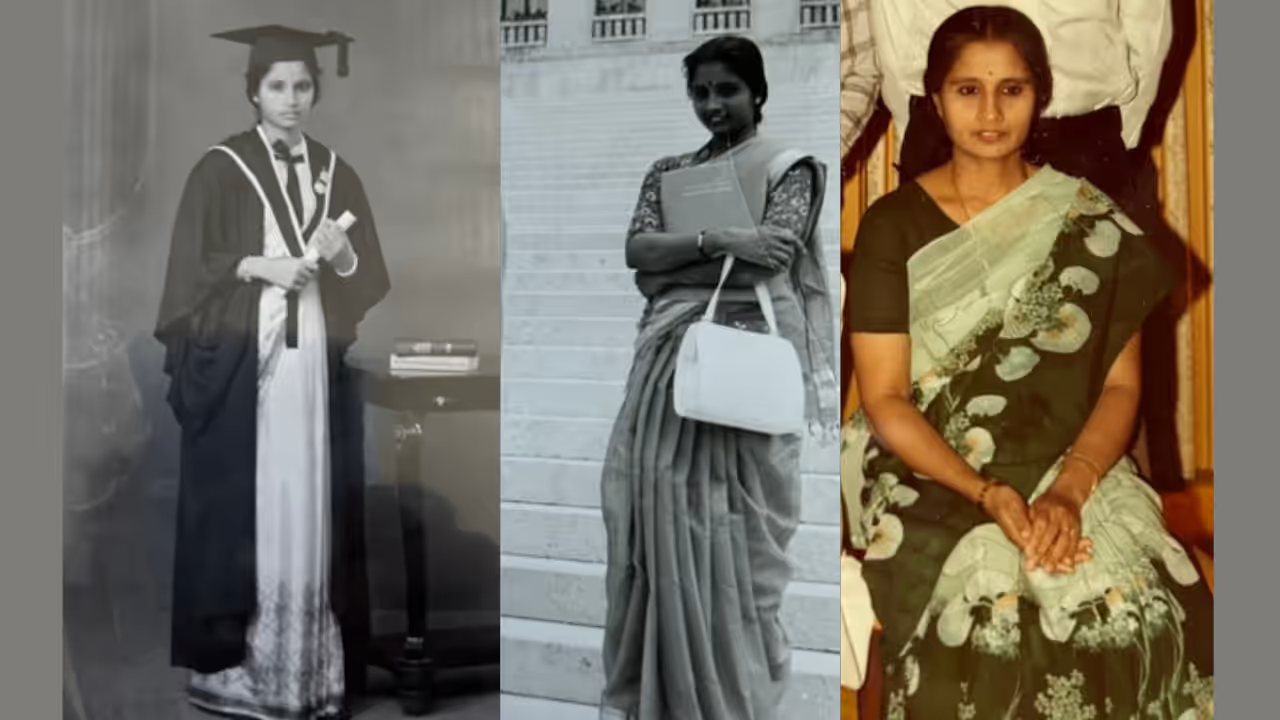
TK Radha, one of India's first women scientists, broke barriers to reach Princeton's Institute for Advanced Study. Despite her significant achievements, her story remains largely unknown and her contributions are not talked about enough.
Here’s the remarkable story of TK Radha, one of the first women scientists from India, who ventured into the world of science during an era when women were not even sent to schools for elementary education. Hailing from a traditional family in Kerala, she broke barriers and went on to reach the prestigious Institute for Advanced Study in Princeton, USA, the very place where legendary physicists like J Robert Oppenheimer, known as the 'Father of the Atom Bomb', once worked.
Indian Woman Scientist
In those days, the world of scientific research and innovation was dominated by men. Against such odds, the presence of an Indian woman scientist in that space was a remarkable achievement in itself. TK Radha not only shared intellectual ground with renowned scientists like J Robert Oppenheimer, who worked on nuclear energy and the atomic bomb, but also contributed to research on topics that were far ahead of their time.
Despite making significant contributions to the world of science, she never received the recognition she truly deserved. TK Radha’s story has been largely erased from the mainstream narrative of history. No books, no documentaries, no podcasts, almost nothing records her remarkable journey.
Related Articles

Story of Perseverance
Radha’s story is not just the story of one woman. It reflects the experiences of countless women who, without support or recognition, forged their paths in male-dominated fields. Despite their brilliance and perseverance, many were written out of history simply because they did not conform to society’s expectations. Her journey stands as a powerful reminder of the talent and potential the world has too often ignored.
Now that stories of trailblazers like TK Radha are finally coming to light, we’re left to wonder: how many brilliant minds have we lost to neglect, bias, or silence? And it’s high time we unearth these forgotten stories from the dust of history and give them the recognition they’ve long deserved.