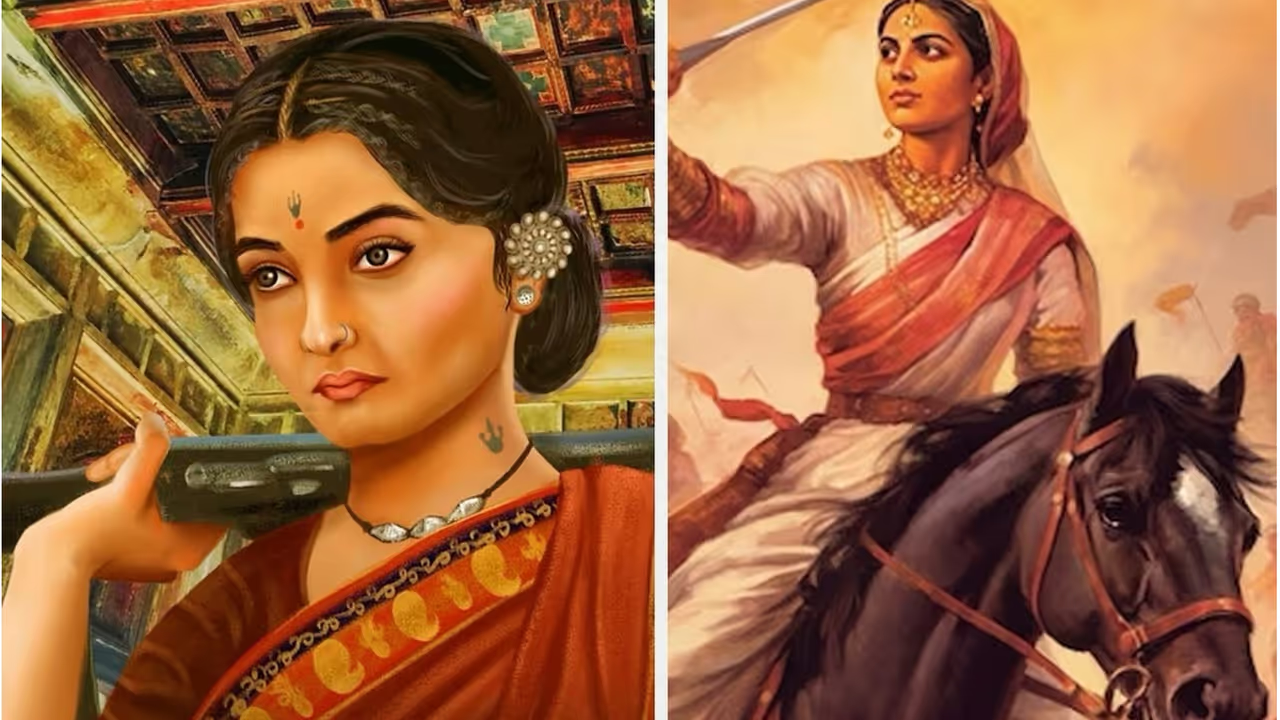
Jhalkari Bai, a remarkable woman warrior fought bravely in India's 1857 war. From a humble background, she rose to lead the Durga Dal, ultimately sacrificing herself for the queen and the cause of freedom.
Freedom Fighter Jhalkari Bai: When discussing India's First War of Independence in 1857 and its women warriors, most people first mention Rani Lakshmibai of Jhansi. Her tales of valour, courage, and sacrifice are etched in every Indian's heart. Many are unaware of another remarkable fighter whose bravery matched that of the queen herself- Jhalkari Bai. Not only was she a close companion to the queen, but she also bore a striking resemblance to her, often standing in her place on the battlefield. Jhalkari Bai fought fiercely for her motherland until her last breath. Her story is one of inspiration, sacrifice, and unwavering courage. Discover the incredible journey of Jhalkari Bai, the revolutionary woman who fought valiantly for freedom.
Who Was Jhalkari Bai?
Jhalkari Bai was born on November 22nd in a small village in Bundelkhand to a poor Koli family. Born to father Sadova (Mulchand) Koli and mother Jamuna Bai (Dhaniya), Jhalkari's childhood was spent in difficult circumstances. After her mother's death, her father raised her like a son, instilling in her a sense of self-reliance and courage from a young age. Along with household chores, she learned to fetch wood from the forest, care for animals, and stand up bravely when needed.
Jhalkari Bai's Bravery
An incident from her childhood is still famous today. While collecting wood in the forest, she encountered a ferocious tiger. Undeterred, she attacked it with her axe and killed it. Another time, dacoits attacked a village trader. Jhalkari single-handedly confronted them and forced them to flee. Impressed by her bravery, the villagers married her to Puran Koli, a brave soldier in the Jhansi army.
Related Articles

Jhalkari Bai's Role in the Army
After marriage, Jhalkari moved to Jhansi with her husband. Here, she met Rani Lakshmibai and soon became the head of her women's army, the Durga Dal. Rani and Jhalkari looked so alike that they often confused enemies in battle by disguising themselves as each other.
Jhalkari Bai's Part in the 1857 Revolution
During the First War of Independence in 1857, the British besieged the Jhansi fort. In this hour of crisis, Jhalkari Bai disguised herself as the queen and faced the enemies so that the queen could safely leave the fort and strategize. In this deception, the British thought they had captured the queen, but it was actually Jhalkari. She was seriously injured in this battle. Before taking her last breath, she chanted Jai Bhavani and attained martyrdom on the battlefield.
Jhalkari Bai's courage is still remembered in the folk tales and songs of Bundelkhand. In 2001, the Government of India also issued a postage stamp in her honour. Her memorial, along with that of Rani Lakshmibai of Jhansi, is located in Gwalior, bearing eternal witness to her sacrifice.
She was not just a warrior; she was a female revolutionary who sacrificed her life fighting for the country's independence alongside Rani Lakshmibai. She is an example of how countless unsung heroes and heroines also risked their lives in India's freedom struggle, whose stories should be told to every generation.