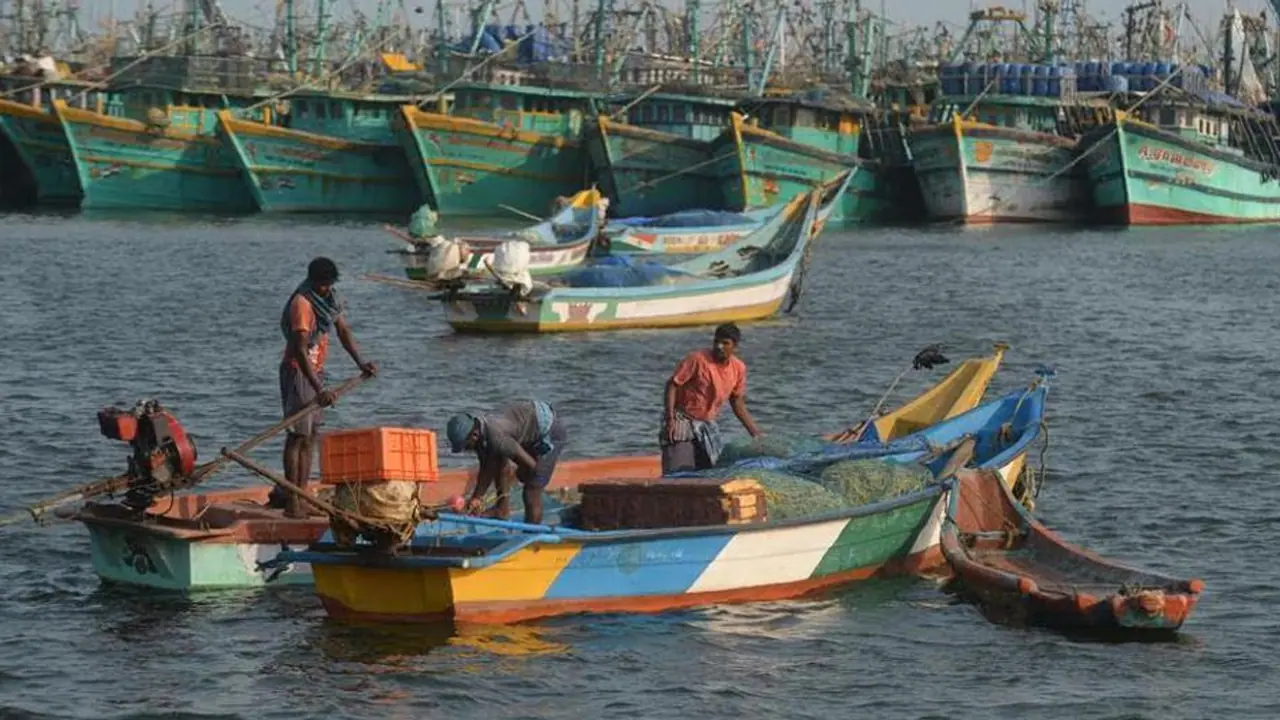
ISRO’s NavIC helps Indian fishermen with real-time navigation, weather alerts, SOS, and border warnings near Pakistan. Installed on 1 lakh boats, it improves safety and security, though fishermen still face economic challenges.
For decades, fishermen along India’s western coastline, especially Gujarat, have lived with the fear of uncertainty at sea. Every fishing voyage meant braving towering waves, unpredictable storms, and an invisible boundary with Pakistan that, if crossed, could land them in jail for years. Many never returned, leaving families to wait endlessly for a knock that never came.
That fear is now giving way to hope.
The Indian Space Research Organisation (ISRO) has rolled out an indigenously developed GPS-based safety system, designed to protect fishermen, boost their catch, and strengthen national security. In Gujarat—the state with India’s longest coastline—this system is already transforming lives.
Related Articles

The Red Line of Safety
On the screens installed inside fishing boats, a glowing red line now marks India’s maritime boundary with Pakistan. If a boat drifts dangerously close, alarms and alerts flash instantly, warning fishermen before they cross over. This simple but powerful feature has already saved countless men from capture and imprisonment across the border.
Technically called the Distress Alert Transmitter (DAT), the system is better known to fishermen by its friendly name—NavIC (Navigator). More than just a boundary marker, NavIC acts as a lifeline at sea.
Features That Save Lives
The GPS-based device is packed with tools that make a fisherman’s life safer and smarter:
- Real-time navigation: Shows exact boat position on the map.
- Fishing guidance: Identifies algae-rich waters where fish are abundant.
- Weather alerts: Sends advance warnings about cyclones and rough seas.
- Emergency SOS: One red button can summon the Coast Guard or Navy, even when mobile networks fail.
- Language support: Available in 13 Indian languages, including Gujarati, Tamil, and Marathi.
For communities where radios and instinct were once the only tools of survival, these features are nothing short of revolutionary.
How It Works
The system relies on ISRO’s NavIC satellites, which continuously beam signals to monitoring stations in Delhi. From there, alerts are relayed back to boats or directly to rescue agencies. When a fisherman presses the SOS button, a distress message is acknowledged instantly—reassuring families that help is on the way.
Currently, around 1 lakh boats across India are fitted with this system, including nearly 5,000 of Gujarat’s 20,000 vessels. Soon, installation will be mandatory for all new boat registrations.
Gujarat’s Crucial Role
With 1,500 km of coastline, Gujarat has India’s longest shoreline and the highest number of fishermen arrested for crossing into Pakistani waters. The new system not only protects these men but also strengthens coastal security.
The technology was born from two pressing needs:
1. Preventing fishermen from accidentally entering hostile waters.
2. Strengthening coastal surveillance after terrorists, including Ajmal Kasab in 2008, exploited gaps in maritime security to reach Mumbai.
Thus, NavIC is both a humanitarian shield and a national safeguard.
Life at Sea: The Struggles Beyond GPS
While the new safety net is a blessing, the hardships of fishing remain harsh.
- Each trip costs around ₹5 lakh, with diesel alone consuming the biggest share.
- Nets cost ₹50,000 each and often tear in rough waters.
- A fisherman earns barely ₹15,000 a month, while boat captains (tandels) earn ₹30,000–₹35,000.
- Many families mortgage jewelry or borrow heavily to finance a trip.
- On a single voyage, 5–6 fishermen and one captain support nearly 40 dependents back home.
Daily life on board is grueling—exhaustion from hauling nets, poor hygiene, cramped cooking arrangements, and months away from loved ones. Fishing is not a passion; it is survival.
Voices from the Shore
- Shaileshbhai, Veraval fisherman: “This system is life-saving. With one button, we can call the Coast Guard in emergencies.”
- Umeshbhai, boat captain: “Earlier we only had wireless radios. Now we get cyclone alerts and fishing zone updates. It helps us plan better.”
- Haresh Masani, fisherman: “Reaching fishing grounds used to take a whole day. With GPS, we save time and avoid risky areas.”
ISRO has already launched 11 navigation satellites, though not all remain active. Currently, NavIC provides coverage across India and waters up to 1,500 km beyond its shores. Future launches are expected to expand it into a global navigation service.
For now, Gujarat’s fishermen are leading the way. From relying on instinct and radios, they now sail with satellites as their silent guardians. The red line on their screens is not just a boundary—it is a promise of safety, security, and the hope of returning home.