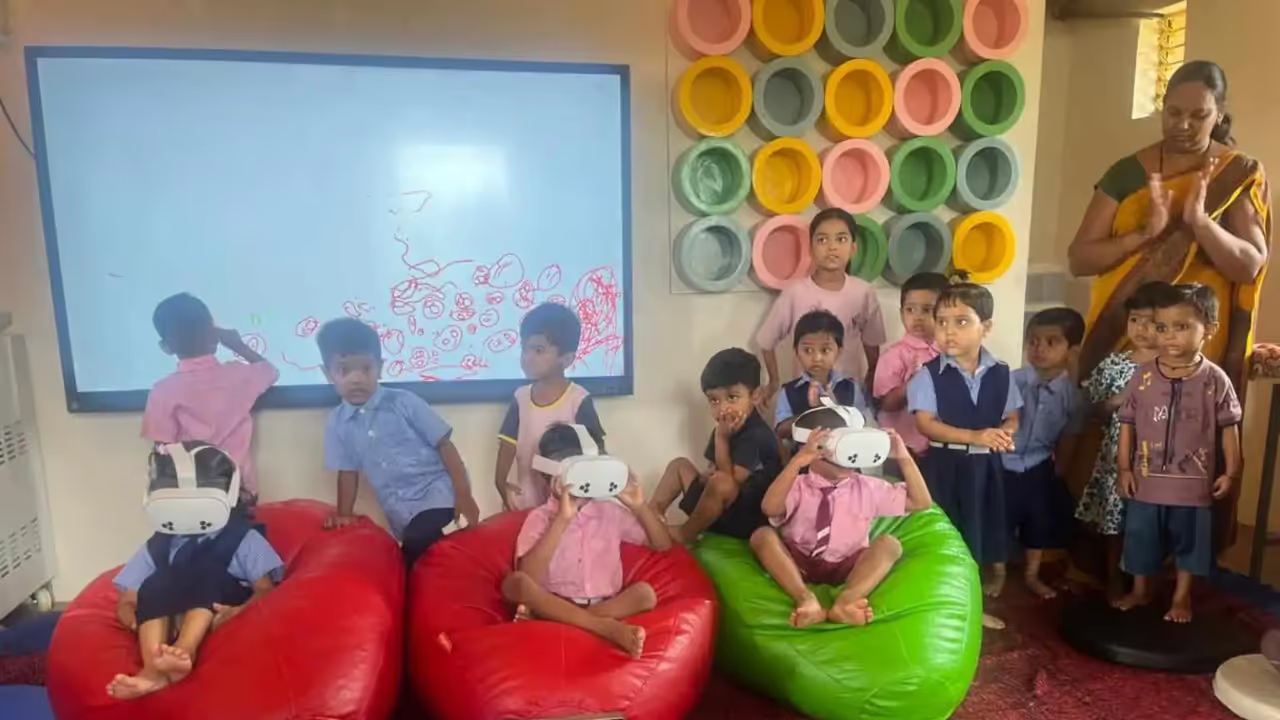
Maharashtra launched India's first AI-powered anganwadi in Waddhamna village, Nagpur, blending VR, smart boards, and gamified learning. This Mission Bal Bharari pilot aims to modernize early education and will expand to 40 more centres.
In a pioneering move to bring cutting-edge technology to rural classrooms, Maharashtra has launched India’s first artificial intelligence-powered anganwadi centre. Located in Waddhamna village, about 18 kilometres from Nagpur, the centre was inaugurated on July 27 by Chief Minister Devendra Fadnavis, signalling a significant leap towards modernising early childhood education in underserved regions.
This milestone project is part of Mission Bal Bharari, a flagship initiative of the Nagpur Zilla Parishad aimed at integrating digital tools into foundational learning.
Blending AI, VR, and Gamified Learning
Related Articles

The upgraded anganwadi uses a range of advanced technologies to make learning more engaging and adaptive for young children. Interactive smart boards, Meta VR headsets, tablets, and gamified content are now part of daily lessons. Children learn poems, songs, numbers, and other core concepts in an immersive environment tailored to their individual learning pace.
Within days of introducing the technology, enrolment jumped from 10 children to over 25 in the age group of 2 to 6 years—an early sign of the model’s appeal.
Pilot for Digital-First Education
Among Nagpur district’s 2,200+ anganwadi centres, Waddhamna was chosen as the pilot site thanks to its accessibility and proximity to teacher training centres. The project, which cost approximately ₹9.5 lakh, was funded through the Zilla Parishad’s CESS resources.
The centre is led by anganwadi worker Saroj Kukde, who now integrates ten VR headsets and the smart board into the daily five-hour schedule. For about an hour each day, AI-powered learning sessions help track each child’s progress, adjusting content difficulty based on response times and engagement levels.
Collaboration Under IndiaAI
The transformation was made possible through a partnership with Qolaba, a tech company participating in the Central government’s IndiaAI programme. Alongside learning tools, the centre has Wi-Fi-enabled CCTV cameras so education officers and other stakeholders can monitor activities remotely.
Training Anganwadi Workers for the Digital Age
Recognising that technology is only as effective as the people who use it, the programme also invests in capacity-building. Anganwadi workers receive structured training three times a week. The first phase focuses on basic digital literacy, while later modules will teach skills like creating custom learning materials with generative AI—covering everything from text and graphics to music.
Plans to Scale Up
Buoyed by the promising response, the Nagpur Zilla Parishad plans to roll out the AI-enabled anganwadi model in 40 more centres across the district. The next stage will bring in new tools to monitor children’s cognitive and physical growth, along with AI-based nutrition assessment to improve overall wellbeing.
Officials believe the initiative could set a template for technology-driven early education in India’s villages, narrowing the digital divide and giving rural children a stronger start in life.