Explore 10 significant historical sites in India that played a crucial role in the country's struggle for independence. From the Red Fort to Gandhi Smriti, these locations offer a glimpse into the sacrifices and triumphs of India's freedom fighters.
India celebrates its Independence Day every year on 15th August, a day of immense pride and honour for every Indian. While most people have only read about the nation’s struggle for freedom in history books, the true spirit of independence still lingers in the very walls, soil, and air of places where freedom fighters once risked their lives, endured hardships, and made the ultimate sacrifice. If you genuinely wish to connect with India's journey to freedom, make sure to visit these ten historic sites.
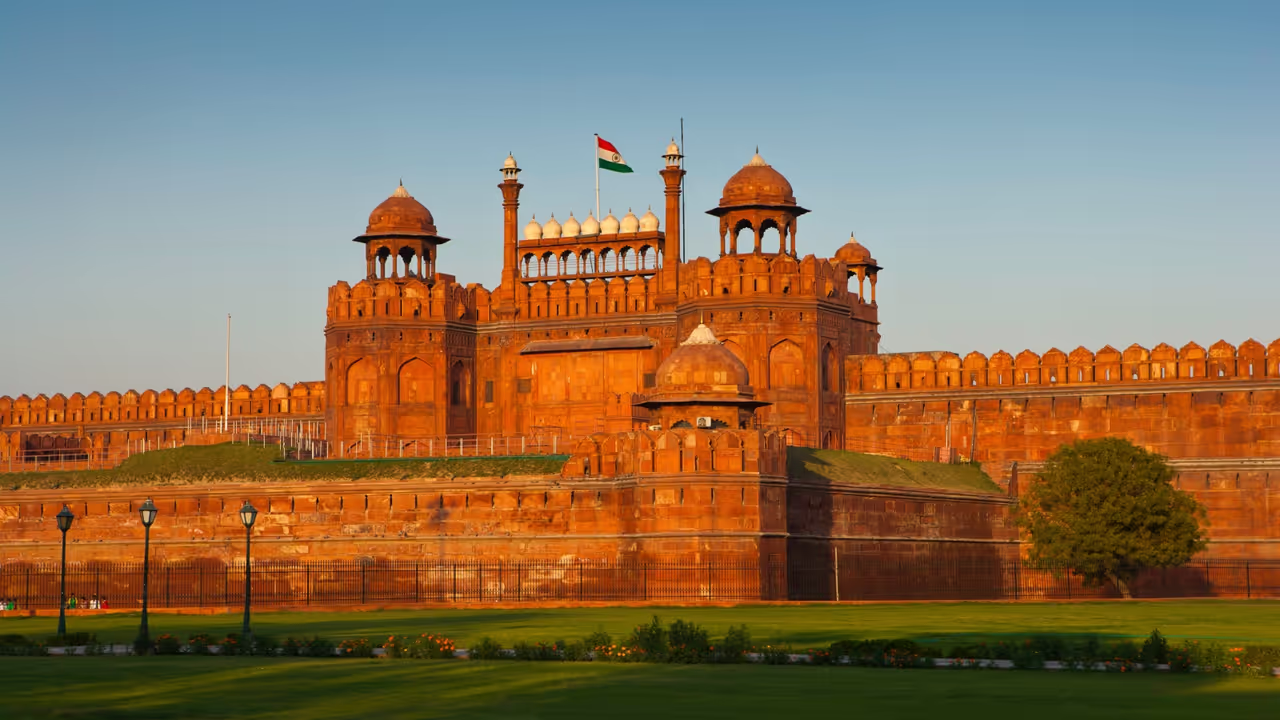
Red Fort, Delhi
On August 15, 1947, the first Prime Minister of independent India, Pandit Jawaharlal Nehru, hoisted the tricolour here for the first time. Even today, the Prime Minister's address is given from here every year on Independence Day. The massive walls of the Red Fort are a witness to the country's freedom from British rule.
Cellular Jail, Andaman and Nicobar Islands
This jail was the most terrifying face of British rule. It was known as Kala Pani. Many revolutionaries like Veer Savarkar were given inhuman torture here. Even today, the museum and the light and sound show of the struggles of brave revolutionaries give goosebumps.
Related Articles

Sabarmati Ashram, Ahmedabad
This ashram of Mahatma Gandhi was an important centre of the freedom movement. Gandhiji started the Dandi March from here. Even today, this place stands as a symbol of peace, simplicity, and Swadeshi ideology. While living in this ashram, Gandhiji conducted the strike in the mills of Ahmedabad and informed the Viceroy of India about starting the Civil Disobedience Movement by writing a letter.
Jallianwala Bagh, Amritsar
The dark day of April 13, 1919, when unarmed people were fired upon. People had gathered here to peacefully protest against the Rowlatt Act when a British officer, General Dyer, ordered his troops to open fire without any provocation. More than 400 people lost their lives in the massacre, and over 2,000 were injured. This site stands as a stark reminder of the brutality inflicted by the British on innocent Indians.
Netaji Bhawan, Kolkata
This was the home of Netaji Subhas Chandra Bose, from where he planned his escape from British rule in 1941. Now it is a museum, which houses his personal belongings and the history related to the freedom struggle.
Aga Khan Palace, Pune
Mahatma Gandhi, Kasturba Gandhi, and Sarojini Naidu were imprisoned at this site. It witnessed numerous significant moments connected to the freedom struggle and the life of Gandhiji. Kasturba Gandhi spent her final days here and passed away within these walls. Her samadhi (memorial) is also located at this very place.
Victoria Memorial, Kolkata
This magnificent monument from the British era is a big part of history today. The gallery here contains many rare photographs and documents related to the freedom struggle and colonial India.
India Gate, Delhi
Originally built in memory of the martyred Indian soldiers of the First World War, today it is a symbol of freedom and sacrifice. The 'Amar Jawan Jyoti' burning here makes every Indian feel proud.
Kakori Memorial
In 1925, revolutionaries challenged the British government through the Kakori incident. This memorial reminds us of those bravehearts who kissed the gallows for the country.
Gandhi Smriti, Delhi
Mahatma Gandhi spent the last 144 days of his life here. He was assassinated here on January 30, 1948. This place provides an opportunity to understand Gandhiji's principles and philosophy of life closely.