
Most fresh perfumes don't last in Indian heat and humidity. Learn why aquatic fragrances fade fast and which long-lasting alternatives actually work in 40°C+ weather.
The Fresh Perfume Problem Nobody Talks About
You apply your favorite aquatic perfume in the morning. It disappears by 11 AM.
You're not imagining this. It's also not because you purchased a "fake" perfume.
Related Articles

The majority of new scents are just not designed for Indian weather.
If you live in Delhi, Mumbai, Bangalore, or anywhere temperatures cross 35°C with high humidity, you've likely experienced this: citrus colognes that disappear within 2 hours, ocean-inspired scents that turn sour in sweat, and "long-lasting" claims that don't hold up past your commute.
The reason? Physics, chemistry, and a fragrance industry that designs primarily for European climates.
Why Do Fresh Perfumes Fade So Fast in Heat?
Heat Accelerates Evaporation
Every perfume is made of volatile molecules. The "fresher" a scent—citrus, aquatic, ozonic—the lighter and more volatile those molecules are.
In temperatures above 35°C, top notes evaporate 40-60% faster than in cooler climates. Citrus notes like lemon, bergamot, and orange break down rapidly. Marine accords lose structure and turn flat. Projection spikes initially, then crashes within hours.
Think of it like ice melting faster in summer. Fresh perfume molecules behave the same way.
Humidity Distorts the Scent Profile
Mumbai's 80% humidity isn't just uncomfortable—it chemically alters how perfumes smell.
When moisture binds with fragrance molecules, clean aquatics can smell soapy or metallic. Citrus becomes sharper, almost acidic. Florals amplify unpredictably. Sweet notes turn cloying.
This is why a perfume that smells amazing in an air-conditioned store can feel completely different outdoors.
Sweat Breaks Down Fragrance Structure
Indian summers mean sweat. And sweat is acidic, with a pH between 4.5 and 6.
Most fresh perfumes are alcohol-based and designed for dry skin. When mixed with perspiration, the fragrance's pH balance shifts. Delicate top notes collapse faster. The scent turns sour or skin-like. Longevity drops to 2-4 hours maximum.
If you're looking for a sweat-proof perfume, generic fresh fragrances won't cut it.
What Makes a Fresh Perfume Actually Last in Indian Weather?
Not all aquatic perfumes are created equal. The ones that perform in extreme heat share specific characteristics.
Higher Concentration Equals Better Longevity
Concentration directly determines how long a fragrance lasts on your skin.
Eau de Cologne, at 3-5% concentration, fades within 1-2 hours. Eau de Toilette, ranging from 5-15%, lasts 3-5 hours. Eau de Parfum at 15-20% gives you 6-8 hours. Extrait de Parfum, the highest concentration at 20-40%, can last 10-14+ hours.
In Indian conditions, aim for EDP or Extrait concentration minimum. Anything lower simply won't survive the heat.
Woody or Musky Base Notes Anchor Freshness
The mistake most fresh perfumes make is being built entirely on volatile notes.
A heat-resistant aquatic fragrance needs three distinct layers. The top notes—ozone, citrus, lavender—deliver immediate freshness. The heart notes—marine florals, sea salt—provide character and complexity. The base notes—cashmeran, patchouli, cedarwood, ambroxan—create staying power.
The base notes act as molecular anchors. They slow down evaporation and keep the freshness from collapsing by midday.
Performance-Boosting Aroma Molecules
Modern perfumery uses synthetic molecules specifically designed for longevity and projection.
Iso E Super creates a skin-like aura and extends wear time significantly. Ambroxan adds warmth and diffusion without heaviness. Cashmeran provides a smooth, musky backbone that lasts all
day. Calone delivers marine freshness with better stability than natural seaweed extracts.
These aren't "cheap fillers." They're the reason some perfumes last 12 hours while others fade in 2.
The Best Types of Fresh Perfumes for Hot, Humid Climates
Not every fresh fragrance is summer-appropriate. Understanding which subcategories perform well in extreme heat can save you from disappointing purchases.
Aquatic-Woody Hybrids: The Ideal Structure
The most successful fresh perfumes for Indian weather combine marine freshness with a solid woody foundation. This architectural approach allows the clean, oceanic character to remain present while the base notes prevent rapid evaporation.
Compositions worth seeking out include ozone paired with sandalwood, sea salt layered over cedarwood, or lavender grounded by patchouli. These maintain the expansive, airy opening you expect from an aquatic fragrance, but the woody backbone ensures the scent doesn't collapse by midday.
Citrus-Aromatic with Musky Foundations
Citrus notes alone are too volatile for sustained performance in heat. However, when combined with herbal aromatics and modern musk molecules, they become viable for all-day wear.
Look for fragrances where bergamot is supported by lavender and white musk, or where lemon is reinforced with rosemary and ambroxan. The citrus provides the initial brightness, the aromatics add complexity, and the musk creates lasting skin-scent that extends wear time to 8-10 hours.
What to Avoid in Indian Summer
Pure citrus colognes—compositions built entirely on lemon, orange, and bergamot with minimal heart or base development—will require reapplication every two to three hours. Unless constant respraying fits your routine, these formulations are impractical for Indian conditions.
Similarly, aquatic fragrances with prominent sweet notes present problems in high humidity. Coconut, vanilla, and tropical fruit accords amplify significantly when moisture is present in the air. A scent that feels balanced and wearable in February can become suffocating and cloying when temperatures cross 38°C in May.
Case Study: How TSUNARA Solves the Fresh Perfume Problem
Most brands avoid making bold claims about fresh perfume longevity because it's genuinely hard to achieve.
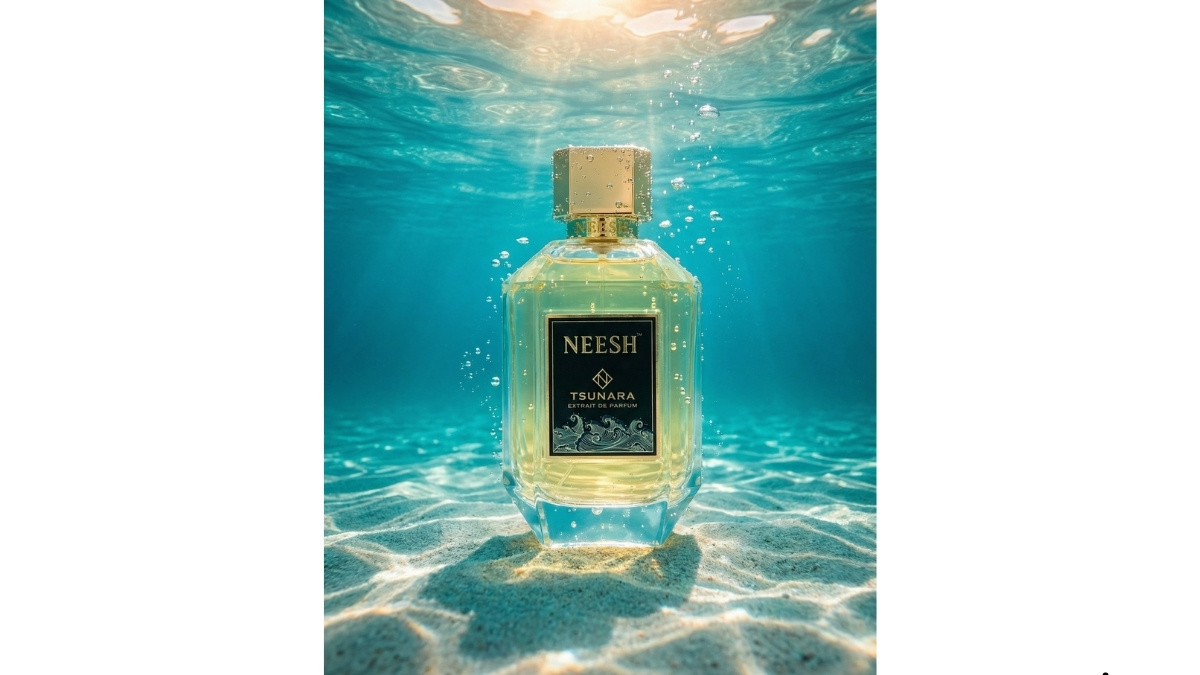
NEESH took a different approach with TSUNARA—an aquatic fragrance specifically engineered for extreme heat and humidity.
The Formulation Strategy
TSUNARA uses Extrait concentration at 30%, which is 40% more concentrated than standard EDT aquatics. This alone extends longevity by 5-7 hours compared to typical fresh fragrances.
The composition incorporates patented aroma-boosting molecules from CPL Aromas. These performance molecules don't exist in nature—they're designed specifically to enhance projection and slow evaporation in high-heat environments.
The fragrance architecture uses layered volatility control. The opening combines ozone and lavender for immediate freshness and airiness. The heart develops with marine accord, jasmine, and banana, creating complexity that prevents the flatness common in aquatic perfumes. The base of cashmeran and patchouli anchors everything, providing 12-14 hours of longevity.
The result is a fresh perfume that maintains its character throughout the day, even in 45°C heat and high humidity.
Real-World Performance Testing
Before launch, TSUNARA was tested against established benchmarks including Acqua di Gio Profondo, Dior Sauvage Elixir, Xerjoff Nio, and Creed Aventus.
Independent reviewers consistently rated it higher for longevity in Indian heat, with 10-14 hours on skin and 2-3 days on clothes. Projection remained strong in humidity without becoming overwhelming. Most importantly, the fragrance demonstrated sweat resistance—it doesn't turn sour or flat when mixed with perspiration.
This isn't marketing hyperbole. It's the outcome of deliberate formulation choices prioritizing performance in challenging conditions.
The Freshness-Longevity Paradox Is Solvable
For years, the fragrance industry accepted a false trade-off: you can have freshness or longevity, but not both.
That's no longer true.
With the right formulation—higher concentration, performance molecules, structural base notes—a fresh perfume can smell clean and aquatic while lasting all day in extreme heat.
If you've been disappointed by aquatic fragrances that fade by lunch, the issue isn't the category. It's the chemistry.
At NEESH, we don't compromise. We build perfumes that perform in the realities of Indian climate—not just in controlled lab conditions.
Because a truly great fragrance doesn't just smell good for an hour. It lasts from morning meetings to evening plans. Even in 40-degree heat. Even in 80% humidity. Even when you sweat.
Explore TSUNARA—India's longest-lasting fresh perfume, built for conditions where most aquatics fail.