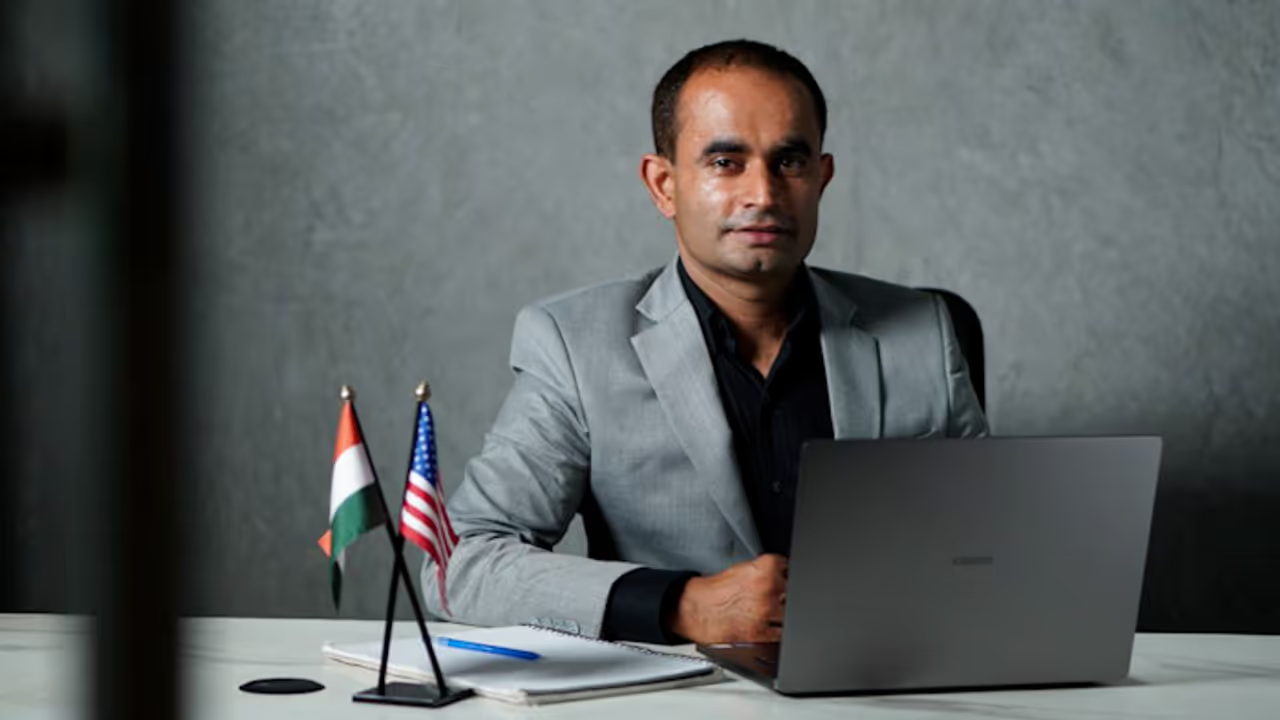
This summer, for the first time, the interns walking through its doors carry IIM credentials.
The building sits in Manjeri, unhurried and purposeful. No flashy signage. No grand announcement. Silicon Jeri - the name Sabeer Nelli gave it - was never meant to turn heads from the outside. It was meant to produce something from the inside.
And it has. The Zil Money Global Development Centre running out of this campus now processes over a hundred billion dollars annually for small businesses across the United States. Real money. Real businesses. Real stakes.
This summer, for the first time, the interns walking through its doors carry IIM credentials.
Related Articles

A Destination, Not Just an Employer
Sabeer Nelli grew up in Manjeri. Built a petroleum distribution business in Texas, then came back - not for nostalgia, but for a conviction he's held long enough to stake real capital on.
Kerala, he has argued at fintech conferences and engineering college auditoriums with equal conviction, does not have a talent problem. It has a destination problem.
"There is no shortage of skilled and educated people in Kerala, or India as a whole," he has said. "What they need is the right guidance and world-class infrastructure, which we plan to provide in Manjeri."
The IIM recruitment isn't a PR move. It's the argument proving itself.
What the Work Actually Looks Like
The 30,000 square foot Global Development Centre - Silicon Jeri, named as a deliberate echo of Silicon Valley with the local suffix intact - is not a support hub for an American company. The engineers here are building the product: payment infrastructure, online banking tools, invoicing systems, financial analytics - the full stack that over a million US businesses rely on.
When something ships from this campus, it reaches real users the same day.
Interns stepping into that environment aren't shadowing senior engineers through demo walkthroughs. They're inside a live platform. Real product decisions. Real commercial consequences. Real people on the other end of every feature push.
Case frameworks prepare you for a lot of things. They don't quite prepare you for this.
Three Parts to a Larger Bet
The internship is one piece of something bigger that Sabeer is building in Manjeri - deliberately, in layers.
The GDC is the anchor. It's the reason talented people have somewhere serious to land. Around it, ZilCubator supports early-stage startups - designed for Malabar's reality, not borrowed from a Bengaluru playbook. And then there's Zil Park, a technology campus still taking shape, conceived along the lines of Apple Park: integrated, self-contained, the kind of place people want to be rather than simply pass through.
The internship pipeline is what connects all three. A summer spent building real fintech in Manjeri leaves something behind - not just a line on a résumé, but a mental model: this place is serious. Multiply that across cohorts and years, and you stop needing a founder's determination to hold the ecosystem together. It starts holding itself.
The Quiet Logic Behind the Choice
Kerala has been exporting its best people for generations. To the Gulf. To Bengaluru. To the United States. The remittances come back. The people, mostly, do not.
Sabeer's bet - and it is a genuine bet - is that the direction can change. Not through an appeal to roots or a call to give back. Through something more durable: infrastructure that makes staying the rational choice.
A platform handling global-scale work. A seed fund with international investor reach. An internship programme credible enough to pull the people who, by every prior logic, should be heading somewhere else entirely.
When an IIM graduate chooses Manjeri this summer, they're not being sentimental. They're being practical.
That's the shift Sabeer has spent years trying to engineer. And right now, it's walking through the door.