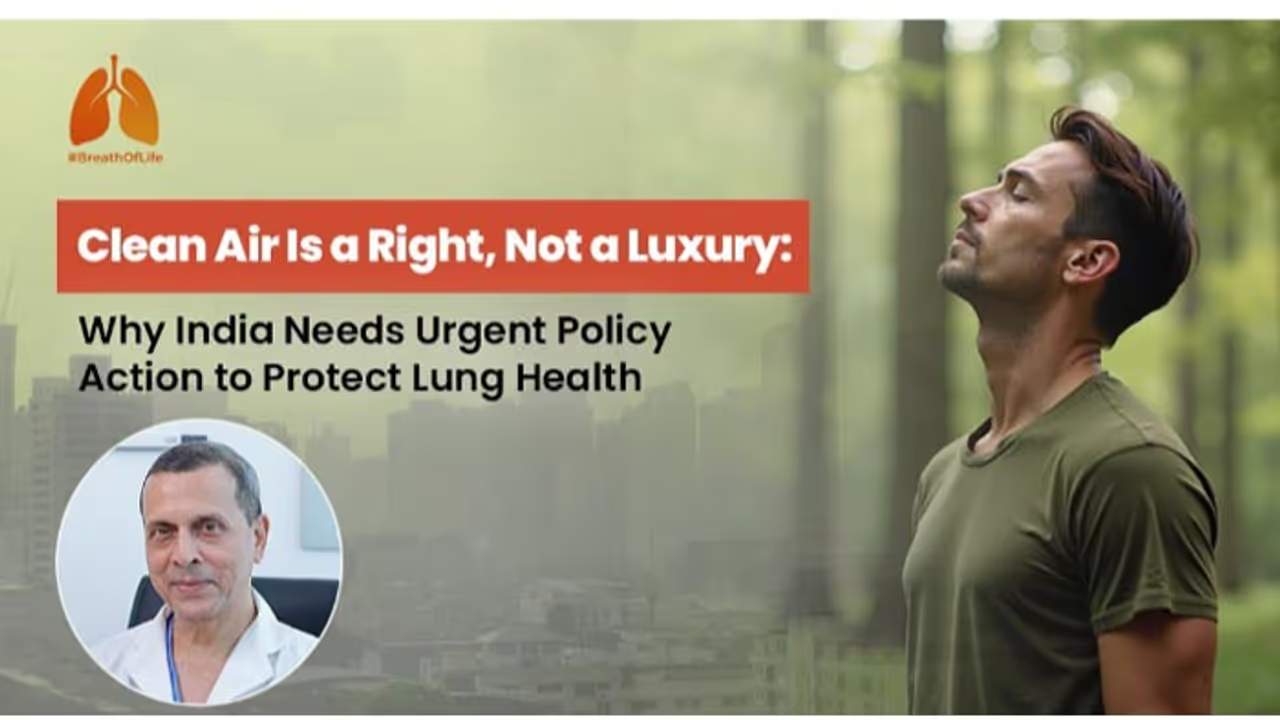
India is home to many of the world’s most polluted cities. In urban and semi-urban areas alike, air quality frequently exceeds safe limits sometimes by several multiples.
For millions of Indians, breathing has become a health risk.
Every morning, citizens step out of their homes into air thick with dust, smoke, and toxic particles. Children travel to school through smog-filled streets. Elderly people struggle to breathe during routine walks. Hospitals brace for seasonal surges of respiratory patients.
Yet, despite the mounting evidence and visible consequences, air pollution in India is still treated as an environmental inconvenience not the public health emergency it truly is.
Related Articles

Clean air is not a privilege reserved for a few cleaner neighbourhoods or gated communities.
It is a basic human right, as fundamental as access to clean water or safe food.
“Air pollution today is one of the biggest threats to lung health in India,” says Dr Arvind Kumar, Chairman of Chest and Robotic Thoracic Surgery at Medanta – The Medicity. “We are seeing its impact not just in patients with lung disease, but in otherwise healthy individuals, children, and non-smokers.”
India’s Air Pollution Crisis: A Health Emergency in Plain Sight
India is home to many of the world’s most polluted cities. In urban and semi-urban areas alike, air quality frequently exceeds safe limits sometimes by several multiples.
The consequences are no longer theoretical:
- Rising cases of asthma and COPD
- Increased respiratory infections among children
- Growing incidence of lung cancer in non-smokers
- Higher risk of heart attacks and strokes
“What is deeply concerning,” says Dr Kumar, “is that we are normalising this damage. Breathlessness, chronic cough, and wheezing are being accepted as part of city life. They should not be.”
Why Lung Health Is Bearing the Brunt
The lungs are the first and most direct victims of polluted air.
Every breath taken in a polluted environment delivers:
- Fine particulate matter (PM2.5 and PM10)
- Toxic gases such as nitrogen dioxide and sulphur dioxide
- Carcinogenic compounds
These pollutants penetrate deep into lung tissue, triggering chronic inflammation and long-term damage.
“Repeated exposure causes progressive loss of lung function,” explains Dr Kumar. “Over time, this can lead to irreversible damage and in some cases, cancer.”
The Inequality of Air: When Clean Breathing Becomes a Class Issue
One of the most troubling aspects of India’s air pollution crisis is its inequality.
- Children cannot choose where they grow up
- Daily wage workers cannot avoid outdoor exposure
- Elderly people cannot relocate to cleaner environments
While air purifiers and controlled indoor environments are available to some, millions have no protection at all.
“Clean air should not depend on income or pin code,” Dr Kumar emphasises. “Health should never be a luxury.”
Why Individual Precautions Are Not Enough
Over the years, responsibility for protection has quietly shifted onto individuals:
- Wear masks
- Buy air purifiers
- Stay indoors
- Monitor AQI
While these steps may reduce exposure, they are not solutions.
“You cannot expect individuals to protect themselves indefinitely against a systemic problem,” says Dr Kumar. “No mask or purifier can compensate for years of breathing toxic air.”
Air pollution requires collective, policy-driven action, not just personal coping strategies.
The Growing Burden on India’s Healthcare System
Air pollution is already placing immense strain on healthcare infrastructure.
Hospitals report:
- Seasonal spikes in respiratory admissions
- Increased emergency visits during high-pollution days
- Long-term treatment costs for chronic lung disease
As pollution worsens, healthcare expenditure will rise not only for individuals, but for the nation as a whole.
“Preventing lung disease is far more cost-effective than treating it,” notes Dr Kumar. “Policy inaction today will translate into a healthcare crisis tomorrow.”
Children and Future Generations: The Highest Cost
Perhaps the gravest impact of polluted air is on children.
Children exposed to high pollution levels face:
- Reduced lung growth
- Increased asthma risk
- Lifelong respiratory vulnerability
“What is particularly tragic,” says Dr Kumar, “is that damage to developing lungs is often permanent. We are compromising the health of future generations before they even have a chance.”
A nation cannot afford progress that comes at the cost of its children’s health.
Air Pollution Is Man-Made and Therefore Preventable
The sources of air pollution are well known:
- Vehicular emissions
- Construction dust
- Industrial discharge
- Fossil fuel dependence
- Agricultural burning
None of these are unavoidable. What is lacking is consistent enforcement and long-term planning.
“Air pollution is not destiny,” Dr Kumar states. “It is the result of policy choices, infrastructure choices, and enforcement choices.”
What Urgent Policy Action Must Look Like
To protect lung health, India needs decisive, sustained interventions:
1. Stronger Emission Standards
- Tighter vehicle emission norms
- Faster transition to clean mobility
- Scrappage of older, high-emission vehicles
2. Urban Planning With Health at the Core
- Green buffers around residential zones
- Regulation of construction dust
- Expansion of public transport
3. Industrial Accountability
- Real-time emissions monitoring
- Strict penalties for violations
- Incentives for cleaner technology adoption
4. Agricultural Reform
- Scalable alternatives to stubble burning
- Financial and logistical support for farmers
5. Health-Centric Air Quality Governance
- Air quality treated as a health metric, not just an environmental one
- Public health advisories linked to AQI levels
- Early screening programs for pollution-related lung disease
Why Clean Air Must Be Framed as a Right
When something is framed as a right, it becomes:
- Non-negotiable
- Enforceable
- A shared responsibility
Countries that have successfully improved air quality did so by recognising clean air as a public good, not an optional environmental goal.
“Breathing clean air is as essential as drinking clean water,” Dr Kumar asserts. “Without it, all other health efforts lose meaning.”
Public Awareness and Political Will: Two Sides of the Same Coin
Policy action rarely happens in isolation. It follows:
- Public awareness
- Citizen demand
- Electoral accountability
As awareness grows about the link between air pollution and lung disease, public pressure must follow.
“Change will come when clean air becomes a voting issue,” says Dr Kumar.
The Cost of Delay Is Too High
Every year of inaction means:
- More children with asthma
- More adults with irreversible lung damage
- More non-smokers diagnosed with lung cancer
- Greater economic and healthcare burden
The question is no longer whether India can afford clean air policies—but whether it can afford not to implement them.
Clean Air Is the Foundation of a Healthy Nation
Economic growth, smart cities, and modern infrastructure lose meaning if citizens cannot breathe safely.
Clean air:
- Improves productivity
- Reduces healthcare costs
- Protects future generations
- Strengthens national resilience
It is not a luxury to be postponed.
It is a necessity to be protected.