That may be why slower, more methodical approaches to wellness are returning to serious conversations. Not as trends. As a correction.
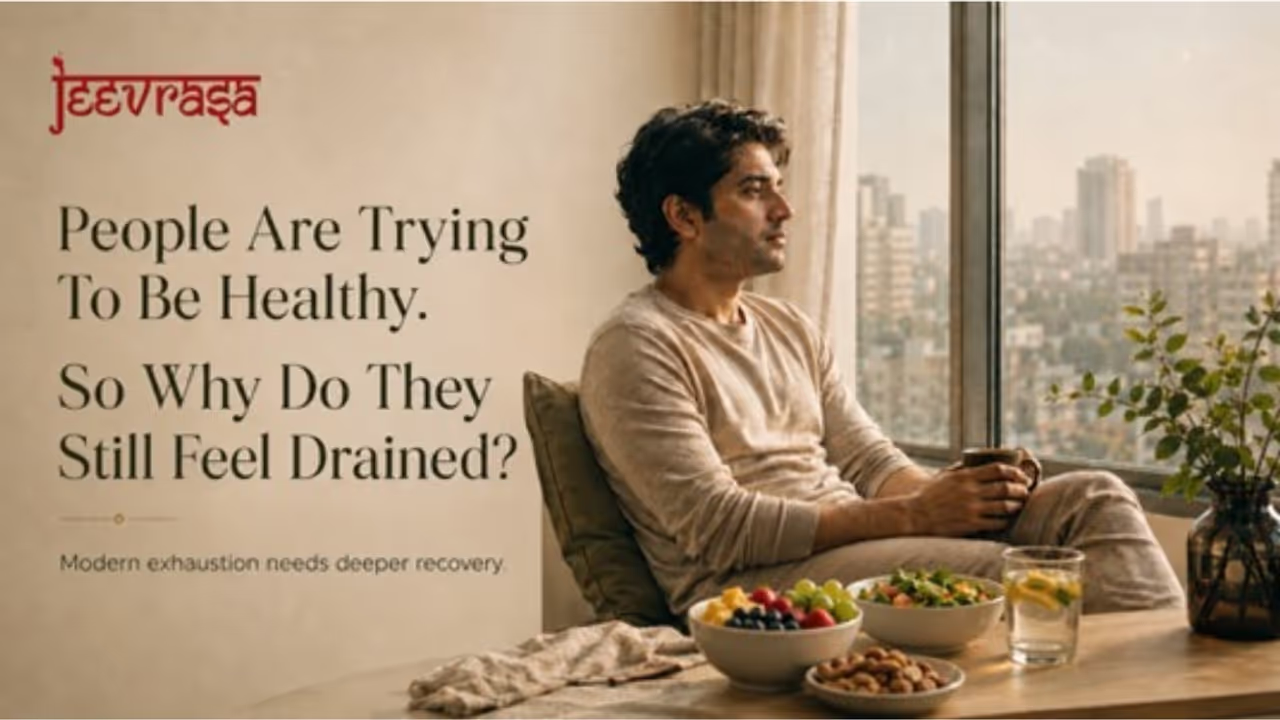
Across Indian cities, wellness spending is climbing. People are ordering cleaner meals, cutting sugar, downloading fitness apps, and stacking supplements. And still, a growing number of urban professionals quietly admit they feel exhausted most of the time.
Not sick. Just not recovered.
It shows up in predictable ways. Waking up tired. Mental fog by afternoon. Digestion that feels off. Four cups of coffee to get through the day. A general sense that the body is running but not restoring.
Related Articles

The experience is common enough that it is worth asking a different question. Not what people are missing from their routines. But what their bodies are constantly trying to process.
The cost of "always on"
City life places the body under a form of load that rarely gets named clearly.
Long hours, disrupted sleep, environmental pollution, processed food, and chronic stress do not individually look like health threats. Together, accumulated over months and years, they create a kind of internal backlog that shows up as low energy, poor digestion, and slow recovery.
In classical Ayurveda, this accumulation has a specific name and explanation. When Agni, the body's digestive and metabolic fire, gets consistently disrupted, it produces Ama. Ama is not simply waste. It is the systemic result of what the body could not fully process, whether food, stress, or environmental load. Over time, it settles into tissues, slows circulation, and creates the dull, heavy feeling many urban people describe as their baseline.
This is not a poetic metaphor. It is a specific clinical framework that classical Ayurvedic physicians used to explain why people who appear healthy still feel chronically unwell.
Why aggressive cleanses often make things worse
Juice fasts, elimination diets, and intense detox protocols have become the default response to this kind of fatigue. They are popular because they feel like action.
But many practitioners and a growing number of consumers are noticing that these approaches often leave people feeling depleted rather than restored. Forcing the body through aggressive restriction when Agni is already weak does not strengthen it. It often adds stress to a system that needs support, not intensity.
The cultural shift happening in wellness right now is quiet but real. People are moving away from punishment-based health routines toward something more sustainable. Less interested in dramatic resets. More interested in consistent support.
Slower formulations, steadier results
This is where traditional Ayurvedic preparation methods become relevant again, not as nostalgia, but as a practical response to a real problem.
Some Indian brands are returning to classical formulation disciplines that were once standard practice and have largely been abandoned by the mass market. One example is the Bhavana process, a method described in classical Ayurvedic texts in which herbal powders are repeatedly processed with plant-based liquids over multiple cycles. Each cycle refines the formulation and allows the liquid medium to integrate more deeply into the herb. The result is a preparation that is gentler on digestion and more bioavailable than standard powder or extract processing.
JeevRasa, a Noida-based Ayurvedic brand, uses this method across its detox-oriented formulations, including Nirmalya Detox and Nirmalya Swarna Detox, the latter incorporating Swarna Bhasma, a classical gold preparation used in Ayurveda for centuries. The brand sources herbs from forest regions and manufactures through a classical Ayurvedic pharmacy following traditional preparation standards.
The positioning is deliberately different from mainstream supplement culture. No dramatic transformation claims. No 7-day reset promises. The formulations are designed to support the body's natural processing capacity over time, working with digestion and metabolic rhythm rather than against it.
Recovery is becoming the new performance
The broader shift in wellness is moving away from optimization and toward restoration. Sustainable energy, digestive resilience, nervous system balance. These are the conversations replacing the peak performance narrative that dominated the last decade.
In that context, classical Ayurvedic frameworks are not competing with modern wellness. They are filling a gap that modern wellness created. The gap between information overload and actual recovery.
People are not looking for more intensity. They are looking for steadiness.
That may be why slower, more methodical approaches to wellness are returning to serious conversations. Not as trends. As a correction.
About JeevRasa
JeevRasa is a classical Ayurvedic wellness brand based in Noida, India. Its formulations are prepared using traditional methods including the Bhavana process and manufactured through a classical Ayurvedic pharmacy. The brand's range includes formulations for detoxification, metabolic support, and immunity, sourced from forest herb regions and formulated without fillers or synthetic additives – jeevrasa.com.