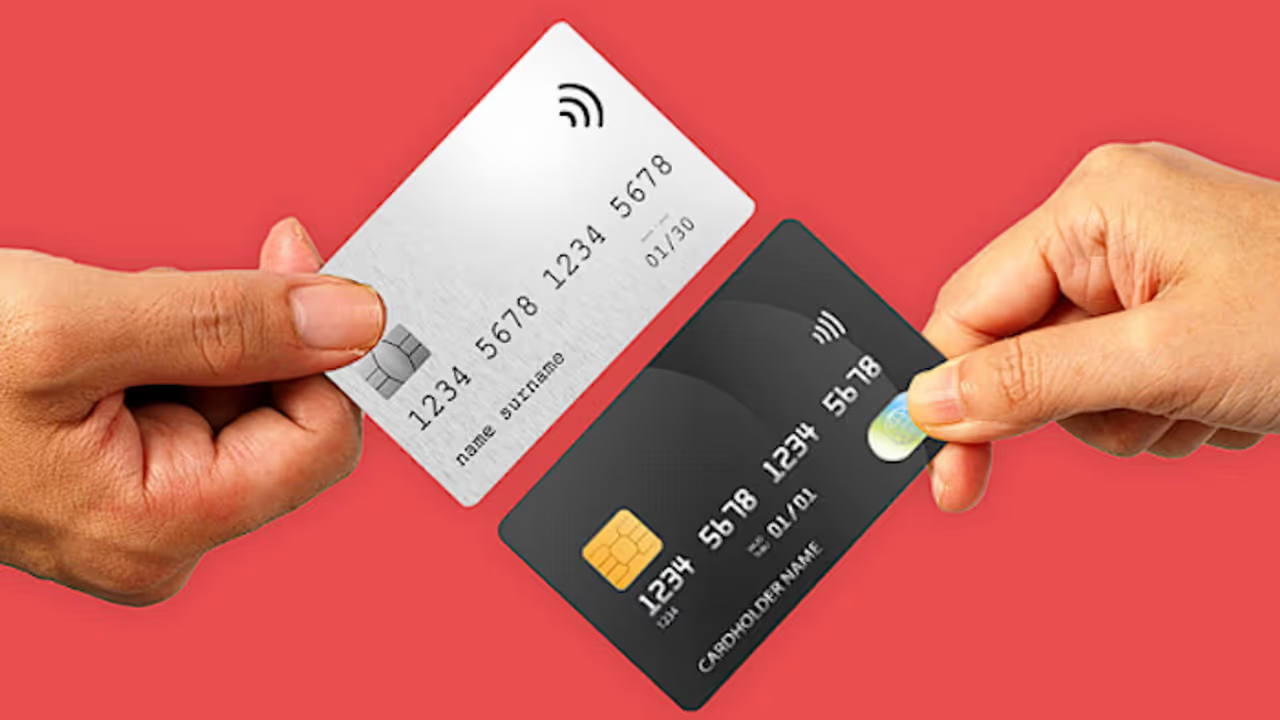
This has led to the rise of metal debit cards, which are often positioned as a more premium and secure alternative to regular plastic cards.
Debit cards have become a part of everyday transactions, from online payments to in-store purchases. As usage has increased, so has the focus on security. Today, users are not just looking for convenience, but also for stronger protection against fraud and misuse.
This has led to the rise of metal debit cards, which are often positioned as a more premium and secure alternative to regular plastic cards. While both types serve the same basic purpose, the way they approach security can differ in subtle but important ways.
Understanding these differences can help you decide which option aligns better with your needs.
Related Articles

Understanding the Basics: Metal vs Regular Debit Cards
A regular debit card is typically made of plastic and is widely used for everyday banking transactions. It offers standard security features such as PIN protection, OTP-based verification, and transaction alerts.
Metal debit cards, on the other hand, are designed with a more premium build and often come bundled with enhanced features. While the material itself adds durability, the key difference lies in the overall ecosystem of security and control that comes with the card.
How Security Works in Regular Debit Cards
Regular debit cards rely on a combination of established banking safeguards. These include PIN-based authentication for ATM and point-of-sale transactions, as well as OTP verification for online payments.
Most banks also provide SMS or app-based alerts for every transaction, allowing users to monitor activity in real time. While these measures are effective, they are largely standard across most cards, which means the level of protection depends more on user awareness and timely action.
In many cases, users may also need to manually enable or disable certain features such as international usage or online transactions.
What Changes with Metal Debit Cards?
Metal debit cards are often linked to more advanced account features and controls, which can enhance security in practical ways.
One key difference is the level of control available to the user. Many metal card offerings include the ability to manage card settings directly through a mobile app, such as turning transactions on or off, setting limits, or restricting usage by category.
Another aspect is the integration of real-time monitoring and faster response mechanisms. Users can often block or manage their card instantly if they notice any unusual activity, reducing the risk of prolonged misuse.
In addition, these cards are usually issued with stricter eligibility criteria, which often means they are paired with accounts that offer more robust security infrastructure overall.
Does the Material Make a Difference?
The metal construction itself does not directly make transactions more secure, but it does contribute to durability and reduced physical damage. A damaged card can sometimes lead to failed transactions or misuse if not noticed in time.
More importantly, the premium positioning of metal cards often means that banks bundle them with enhanced security features, better customer support, and quicker resolution processes.
So, while the material is not the core security factor, it is part of a broader package that focuses on reliability and control.
Practical Differences in Everyday Use
In day-to-day usage, the difference in security often comes down to how quickly and easily you can respond to potential risks.
With regular debit cards, users may rely on customer support or basic app features to manage issues. With metal debit cards, there is often a stronger emphasis on self-service controls, allowing users to take immediate action.
This can be particularly useful in situations like:
- Misplacing your card
- Noticing an unfamiliar transaction
- Wanting to temporarily disable online usage
The ability to act quickly can significantly reduce the impact of potential fraud.
Choosing Between the Two
The choice between a metal debit card and a regular debit card depends on how you use your card and how much control you want over your transactions.
If your usage is limited to basic transactions and you are comfortable with standard security measures, a regular debit card may be sufficient.
However, if you prefer more control, faster response options, and an added layer of monitoring, a metal debit card can offer a more comprehensive experience.
Final Thoughts
Both metal and regular debit cards are designed to keep your transactions secure, but the level of control and responsiveness can differ.
For users who value enhanced control, app-based security features, and a more integrated digital experience, options like the Kotak811 Infinity Metal Debit Card bring together durability with advanced security controls and seamless account management.
Choosing the right card ultimately comes down to how actively you want to manage your financial security and how much flexibility you expect from your banking experience.
Frequently Asked Questions
1. Are metal debit cards more secure than regular debit cards?
Metal debit cards are not inherently more secure due to their material, but they often come with enhanced features and controls that improve overall security.
2. Do both card types use OTP and PIN verification?
Yes, both metal and regular debit cards use standard security measures like PIN authentication and OTP verification for transactions.
3. Can I control my card settings with a Kotak811 metal debit card?
Many metal debit cards offer app-based controls that allow you to manage limits, enable or disable features, and block your card instantly.
4. Is a metal debit card worth it for everyday use?
It can be beneficial if you value additional control, faster response options, and a more premium banking experience.
5. What should I consider before choosing a debit card?
You should look at security features, ease of control, usability, and how well the card fits your daily transaction needs.
Key Takeaways
Metal debit cards are premium alternatives to plastic cards, offering durability and a more refined banking experience.
Both metal and regular debit cards use standard security features like PIN authentication and OTP verification.
Enhanced security in metal cards comes from app-based controls, real-time monitoring, and faster response options.
Users can manage settings like transaction limits or block cards instantly through mobile apps.
Material strength improves durability but does not directly increase transaction security.
Metal cards are often linked to premium accounts with stricter eligibility and advanced security infrastructure.
Choosing between card types depends on the level of control, responsiveness, and features required for daily usage.