Robotic breast cancer surgery is performed using high-definition 3D vision systems and robotic instruments that allow for unparalleled precision.
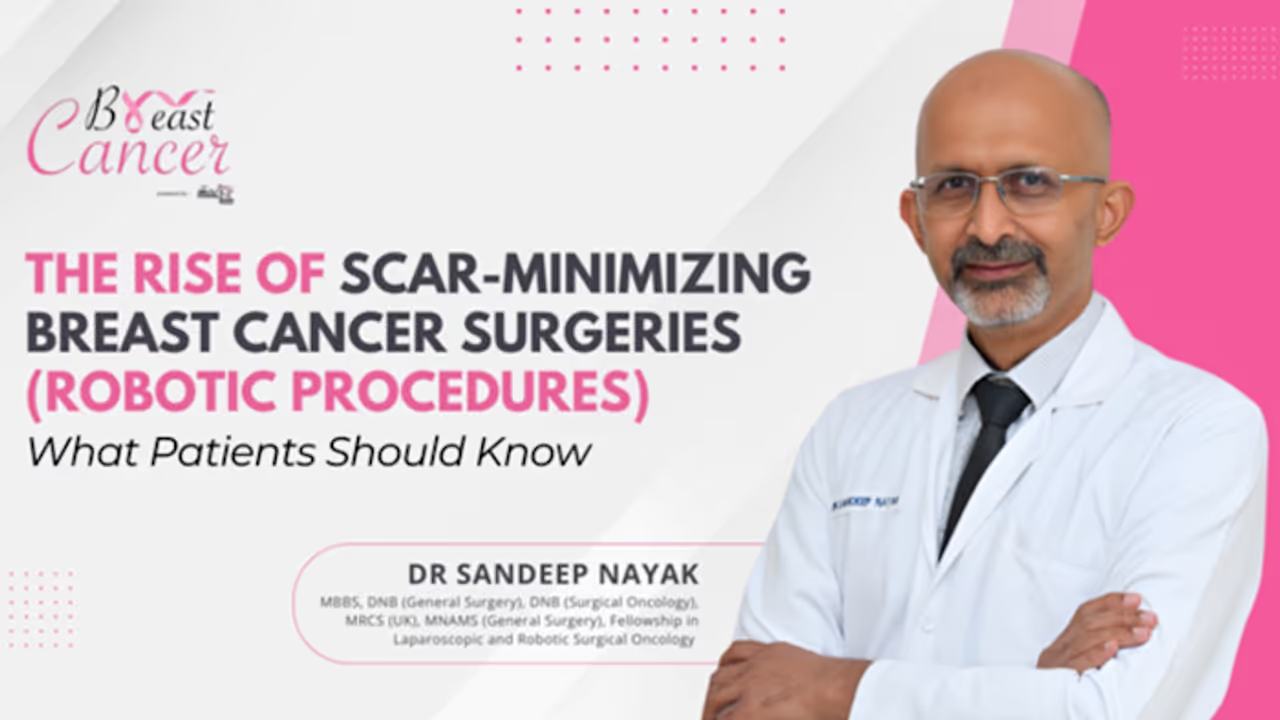
Breast cancer, the most common cancer affecting women worldwide, has long been associated with treatments that, while lifesaving, often leave lasting physical and emotional scars. However, a new era of surgical innovation is offering women a gentler path to healing. With the advent of robotic breast cancer surgeries, patients can now benefit from precision-driven, scar-minimizing procedures that not only target the disease effectively but also focus on preserving dignity, appearance, and quality of life. At the forefront of this transformation is Dr. Sandeep Nayak, one of India’s most respected surgical oncologists, whose pioneering work is changing the way breast cancer is treated across the country.
Recognized as a leading oncologist in Bangalore, Dr. Sandeep Nayak holds multiple leadership positions in the oncology landscape. He is the Chairman – Oncology Services for Karnataka, Executive Director – Surgical Oncology and Robotic Surgery at KIMS Hospital, Head of Minimal Access Surgical Oncology under RGUHS, and Chief of Surgical Oncology at MACS Clinic. With his deep commitment to innovation and patient-centered care, Dr. Nayak has introduced robotic-assisted breast surgeries that significantly reduce scarring and recovery time while maintaining the highest standards of oncological safety. These techniques are a game-changer for patients who, in addition to fighting cancer, are seeking treatments that are less physically and emotionally traumatic.
Robotic breast cancer surgery is performed using high-definition 3D vision systems and robotic instruments that allow for unparalleled precision. By accessing the surgical site through small, strategically placed incisions, often hidden in natural skin folds or under the arm, Dr. Nayak can remove tumors or perform reconstructions with minimal disruption to surrounding tissue. The results are fewer complications, reduced pain, shorter hospital stays, and, most importantly, scars that are either minimal or nearly invisible. This approach is not only technically advanced but also deeply human, addressing the psychological impact of traditional open surgeries on patients’ self-image and emotional well-being.
Related Articles

According to Dr. Nayak, “Breast cancer surgery is about more than just removing a tumor. It’s about helping women heal physically, emotionally, and psychologically. Robotic surgery allows us to achieve the oncological goals while minimizing the trauma of the procedure. It is precise, safe, and cosmetically far superior.” His technique combines clinical excellence with a nuanced understanding of what breast cancer patients truly need: care that treats the disease and respects the person.
While robotic surgery is still being adopted across India, Dr. Nayak’s centers at MACS Clinic and KIMS Hospital have become trusted destinations for this advanced treatment. From nipple-sparing mastectomies and robotic lymph node dissections to reconstruction using flaps and implants, each procedure is customized to suit the patient's medical condition, anatomy, and preferences. The emphasis remains on early recovery, minimal scarring, and restoring confidence, which are particularly significant for younger patients or those concerned about body image after treatment.
The technology itself is revolutionary. Robotic systems enhance the surgeon’s dexterity, vision, and control, allowing for microscale precision even in complex cases. This results in reduced bleeding, fewer postoperative complications, and a lower risk of long-term side effects such as lymphedema. Moreover, for patients who require reconstructive surgery, robotic access enables surgeons to harvest flaps or insert implants through hidden routes, avoiding large visible incisions altogether. These advancements are elevating breast cancer care from a purely clinical experience to a more holistic and empowering journey for patients.
The success of these surgeries is evident not only in clinical outcomes but also in the growing demand from patients seeking less invasive options. With increasing awareness, more women are now asking about robotic breast surgeries as a preferred option. Dr. Nayak’s educational initiatives provide valuable information on eligibility, risks, benefits, and recovery timelines for those considering the procedure. His work has helped demystify robotic surgery for patients and professionals alike, making it more accessible and acceptable in mainstream cancer care.
Training the next generation of cancer surgeons is also a priority for Dr. Nayak. As Head of Minimal Access Surgical Oncology under RGUHS, he has launched India’s first fellowship dedicated to this sub-specialty, ensuring that the future of cancer care is in capable, technologically equipped hands. His contributions to the academic and clinical fields have positioned Bangalore as a national hub for innovation in surgical oncology.
The rise of scar-minimizing breast cancer surgeries reflects a broader shift in cancer care, one that emphasizes patient dignity, recovery, and long-term well-being. Under the leadership of Dr. Sandeep Nayak, these surgeries are no longer limited to high-end hospitals abroad. Indian women now have access to this life-changing technology right here in Bangalore, backed by one of the most respected names in oncology. For patients who are navigating a diagnosis of breast cancer, the availability of robotic surgery offers not just a treatment, but a path toward healing that is less painful, more precise, and profoundly respectful of the human experience.
Contact Information
Dr. Sandeep Nayak
Chairman – Oncology Services, Karnataka, India
Executive Director – Surgical Oncology and Robotic Surgery, KIMS Hospital, Bangalore
Head – Minimal Access Surgical Oncology under RGUHS
Chief – Surgical Oncology, MACS Clinic
+91-9482202240
Disclaimer:This press release is for general information purposes only and should not be construed as professional medical advice. Always consult a doctor before taking any decisions.