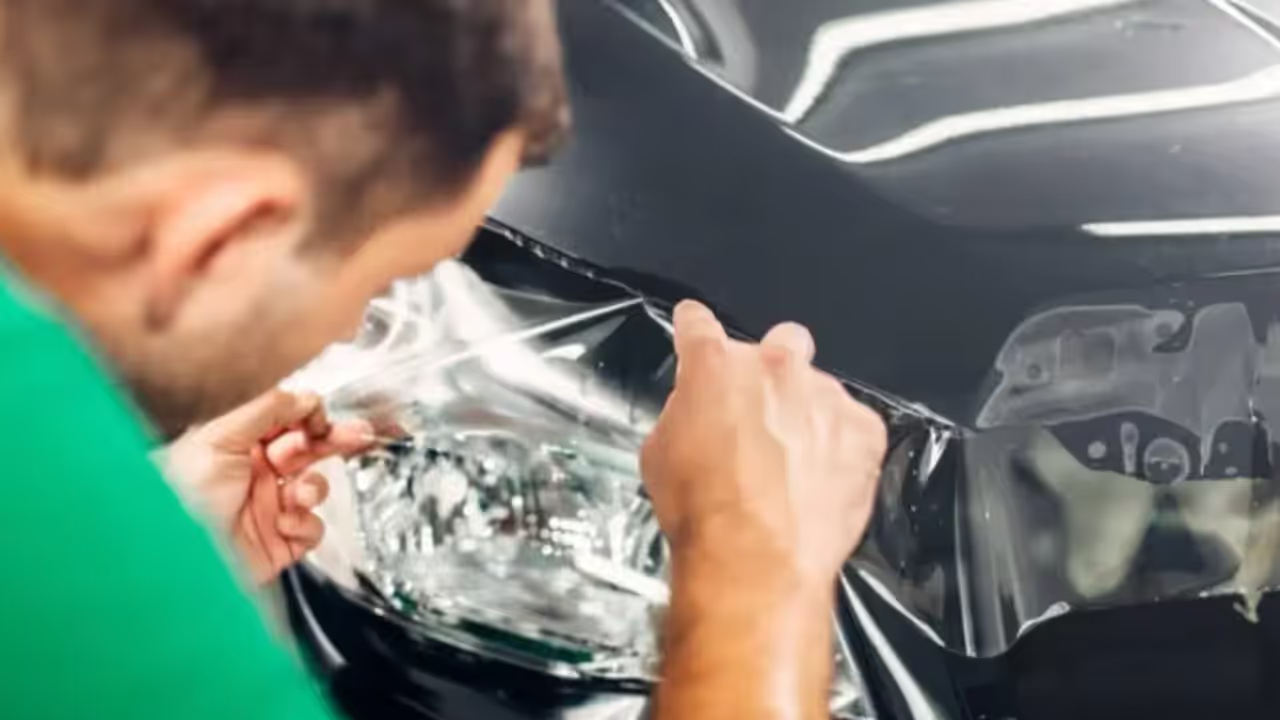
A well-engineered film installed correctly can help protect the original paint while preserving the vehicle’s appearance.
Paint protection film (PPF) is often described as a transparent shield for a car’s paintwork. Applied to vulnerable exterior panels, it helps protect against stone chips, minor scratches, road debris and everyday abrasions without significantly changing the vehicle’s original appearance. But what allows a thin, flexible film to provide this level of protection?
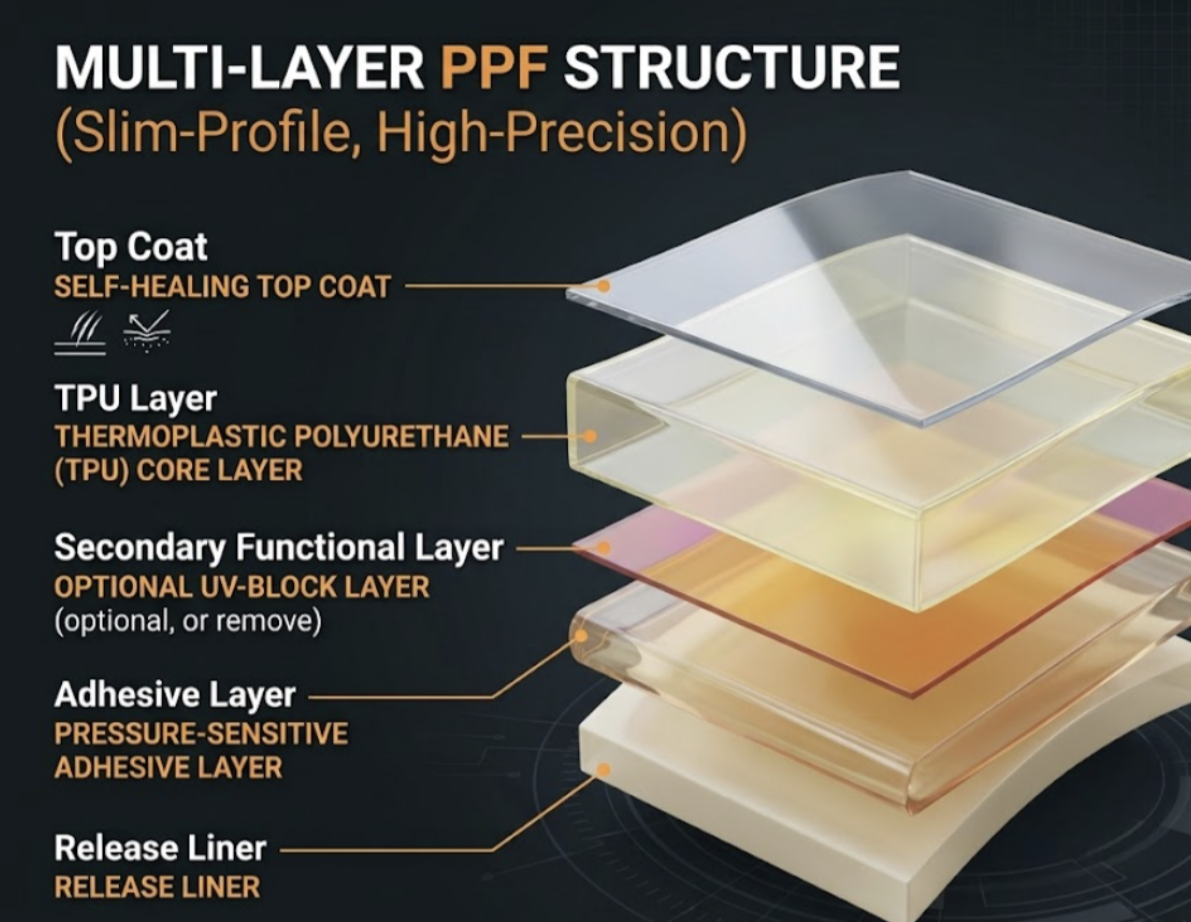
The answer lies in its construction. Modern PPF is an engineered material made up of multiple layers, each designed to perform a specific function. From the outer surface that faces the elements to the adhesive that bonds the film to the paint, every layer contributes to its overall performance. The Layers That Make PPF Work Although the exact construction varies between products, a typical premium PPF includes a protective topcoat, a thermoplastic polyurethane (TPU) base layer and a pressure-sensitive adhesive. A removable release liner protects the adhesive before installation.
1. The topcoat: Protecting the surface The topcoat is the outermost functional layer of the film. It is designed to withstand everyday exposure to sunlight, dirt, water, contaminants and minor surface contact. Depending on its formulation, the topcoat can help maintain the film’s gloss and clarity, improve resistance to staining and support self-healing performance. These properties matter because a film must do more than protect the paint underneath; it must also retain a clean, consistent appearance. Some films are engineered to recover from certain light surface marks when exposed to suitable heat. This behaviour depends on the topcoat’s properties and the conditions under which the film is used. Deep cuts and punctures, however, are not generally repairable through self-healing alone.
2. The core film: Absorbing and distributing impact Beneath the topcoat sits the main film layer, which provides much of the material’s flexibility and impact protection. TPU is widely used in modern PPF because it combines flexibility with toughness, helping the film respond to impacts from small stones and road debris. When a small object strikes a protected panel, the film can absorb and distribute some of the impact energy, reducing the likelihood of damage to the paint beneath it. Its ability to stretch and conform to body panels also makes it suitable for application across curved surfaces.
Image alt text: A diagram showing the layers in a PPF sheet However, not all PPF uses the same formulation or construction. Differences in material quality, thickness and engineering can affect performance. Some specialised products explore additional material combinations to enhance particular properties, but these should be evaluated based on their documented specifications rather than material names alone.
3. The adhesive layer: Keeping the film in place The adhesive bonds the film to the vehicle’s painted surface. It must provide reliable attachment while allowing the installer to position the film correctly during application. Adhesive performance is particularly important around curved panels, edges and complex body contours. Poor adhesion or incorrect installation can lead to lifting, bubbles or contamination beneath the film. The quality of the adhesive, the condition of the paint and the installer’s technique all influence the final result. 4. The release liner: Protecting the adhesive before installation
Before application, a removable liner covers the adhesive layer. It protects the adhesive from dust and contamination during storage and handling. The installer removes it during the application process, exposing the adhesive so the film can be positioned on the vehicle. Although this layer does not remain on the car, it plays an important role in helping preserve the film’s condition before installation.
Why Does the Construction Matter? PPF performance depends on how its different layers work together. A durable core cannot compensate entirely for a weak topcoat, just as excellent surface properties cannot make up for unreliable adhesion. The balance between flexibility, impact resistance, clarity and bonding strength determines how well the finished film performs.
This is also why product testing matters. Manufacturers evaluate properties such as UV resistance, weathering, adhesion and surface durability to understand how a film responds to different stresses. For Indian driving conditions, exposure to intense sunlight, heat, monsoon moisture and road debris makes long-term performance an important consideration.
Brands such as Aegis PPF offer products developed around different protection requirements. However, specifications can vary between ranges, so owners should review the details of the particular film they are considering. What Does This Mean for Car Owners? Understanding how PPF is constructed can help owners make a more informed decision when comparing products. The PPF coating chosen should suit the vehicle, its usage and the level of protection required, rather than being selected on price or thickness alone.
The car PPF cost can vary depending on the film’s construction, vehicle size, coverage area and complexity of installation. Full-body coverage generally costs more than protecting selected high- impact panels, but the right choice depends on individual priorities and driving conditions. When looking for the best PPF brand, consider the film’s documented specifications, warranty terms, installer expertise and after-sales support.
A well-engineered film installed correctly can help protect the original paint while preserving the vehicle’s appearance. Ultimately, PPF works not because of one remarkable layer, but because several carefully engineered layers perform different jobs together. Understanding that construction helps explain both its capabilities and its limitations, and why product quality and professional installation matter as much as the film’s visible finish.
