Beyond physical discomfort, knee degeneration has psychosomatic effects. Patients who reduce movement begin gaining weight.
New Delhi [India], March 17: One of the most overlooked aspects of orthopaedic care is the cultural context and the impact of reduced mobility on the social lives of patients. In India, mobility is not just about walking without pain, but also about sitting cross-legged at a family gathering, climbing temple steps, practising yoga, using an Indian toilet, or squatting comfortably during daily routines.
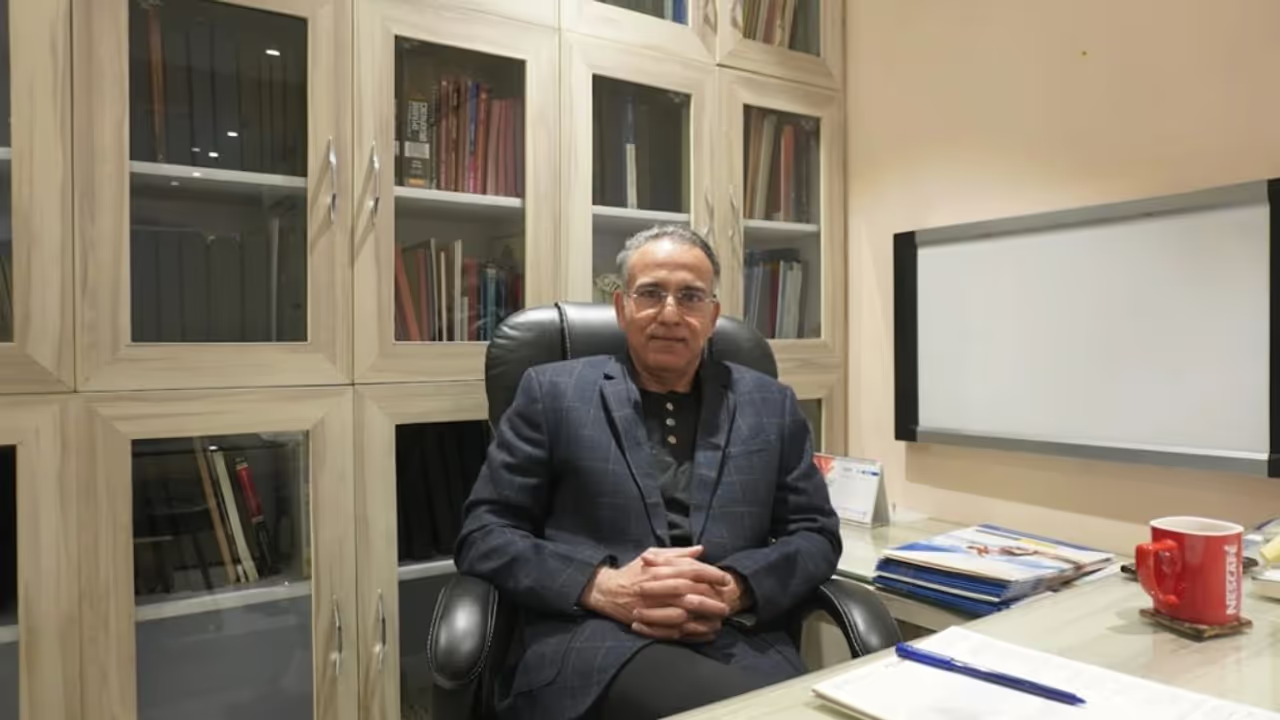
However, most knee implant surgeries and treatment pathways are designed around Western lifestyle choices, where deep squatting and floor sitting are uncommon. According to Dr. Ashwani Maichand, this gap is at the heart of a larger issue in orthopaedics where we treat the knees but ignore the lifestyle preferences and social needs of the patients.
The Cultural Gap in Knee Care
Related Articles

“For many patients, the real distress begins not when they feel pain but when they lose the ability to sit down on the floor,” says Dr. Maichand.
He explains that Total Knee Replacement (TKR), while effective for advanced arthritis, often comes with limitations in deep flexion. In cultures where mobility includes squatting, kneeling, or sitting cross-legged, those limitations affect dignity and independence.
“Our daily life in India demands a greater range of motion. Treatment must reflect that reality,” he notes.”Whether you are squatting down to pray at home or to use the Indian toilet, one of the biggest concerns patients have around TKR is the inability to live their life as usual.”
The Hidden Cost of Waiting
Most patients in their mid-40s or 50s are advised lifestyle modifications weight loss, diabetes control, thyroid management, physiotherapy, and supplements. While important, these measures do not address structural knee damage once it begins.
Dr. Ashwani Maichand describes a common progression:
- Early denial of symptoms
- Diversion to braces, supplements, online searches
- Gradual reduction in activity
- Eventual desperation when climbing stairs becomes difficult
By the time many patients return to the clinic, the damage has progressed significantly, often involving critical structures such as the meniscus and ACL.
“Waiting is not neutral,” he says. “It allows silent deterioration.”
Preservation, Not Just Replacement
Dr. Maichand advocates a proactive, preservation-focused approach particularly during the early stages of meniscus damage.
The meniscus acts like a natural ball bearing in the knee, reducing friction and distributing load. When it deteriorates, stress on surrounding ligaments increases. If intervention happens early, native structures including the ACL can be preserved. Instead of replacing the entire knee, he emphasizes options that address the damaged component while maintaining natural biomechanics.
“The goal should not always be to replace the whole joint,” he explains. “If we preserve what is healthy, patients can maintain a more natural range of movement.” He adds that modern implant technologies now allow for more stage-specific interventions, but awareness remains low.
Active Ageing Is a Structural Issue
Beyond physical discomfort, knee degeneration has psychosomatic effects. Patients who reduce movement begin gaining weight. Sleep patterns change. They avoid travel and social gatherings. Many report feeling “older than their age.”
“Mobility is closely linked to identity,” says Dr. Maichand. “When someone stops sitting on the floor or climbing stairs, it affects confidence and independence.” He believes orthopaedic care must be seen as part of active ageing. “If a 55-year-old becomes inactive due to knee pain, society loses productivity, families lose support systems, and individuals lose quality of life.”
Rethinking the Treatment Timeline
Total Knee Replacement typically has a lifespan of about 20 years. For patients in their 50s, that can mean facing revision surgery later in life. Dr. Maichand questions whether waiting for “end-stage arthritis” should remain the standard threshold for intervention.
“We need to act during the stage of diversion when patients first notice they can’t climb stairs comfortably,” he says. “That is when preservation is most effective.”
He also recommends early MRI evaluation to assess meniscus and ligament health rather than relying solely on X-rays, which primarily show bone changes.
For Dr. Maichand, culture-sensitive orthopaedics is not a marketing phrase, it is a clinical philosophy.
Treatment decisions, he says, should account for:
- Lifestyle habits
- Cultural mobility needs
- Occupational demands
- Long-term activity goals
“Pain relief is important,” he says. “But so is the ability to live the way you are accustomed to living.” As arthritis cases rise alongside metabolic conditions like diabetes and thyroid disorders, he believes the focus must shift from reactive replacement to proactive preservation. “Knee care should not begin when you can no longer climb stairs,” he says. “It should begin when you first notice a change.”
Because in the end, he adds, “Orthopaedics is not just about joints. It is about enabling people to remain active, engaged, and independent for as long as possible.”