
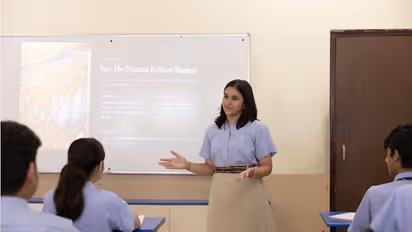
Discipline is often discussed only when something goes wrong. A student talks in class. Another reaches late. Someone forgets homework, argues with a classmate, or breaks a rule. But in a good school environment, discipline should not begin with punishment. It should begin with guidance.
For students, discipline is closely connected with daily school life. It helps them listen better, respect classmates, follow routines, manage time, and complete work. It also helps them understand the effect of their actions. A disciplined classroom is calmer and more focused. It gives every student a better chance to learn.
This is why parents should ask about student discipline during school admission in Bhusawal. It is not enough to know whether a school has rules. Parents should also understand how those rules are explained. They should know how teachers correct students and how the school helps students improve after mistakes.
A parent from Bhusawal said, “As parents, we want discipline in school, but we do not want students to feel scared. We want the school to guide them with patience, so that they learn what is right and why it matters.” Parents should be concerned about discipline because it shapes how a student feels in school every day. Poor classroom discipline can affect learning. Repeated teasing or exclusion can affect confidence. Lack of respect between students can make the school environment uncomfortable.
At the same time, very harsh discipline can also be harmful. It can make students afraid to speak honestly or ask for help. An academic counsellor from Bhusawal said, “Students are still learning how to manage emotions, follow routines, accept correction, and respect boundaries. Discipline should help them grow. It should not make them feel labelled or judged.”
During the admission process, parents can ask how the school handles discipline before problems become serious. Does the school have clear classroom expectations? Are students taught why rules matter? Do teachers speak to students when small behaviour concerns are noticed? Is counselling support available when needed? How does the school respond to bullying, teasing, exclusion, or repeated disruption?
These questions matter because discipline should not be only reactive. Schools should build discipline through everyday habits. This includes classroom routines, teacher feedback, value-based activities, peer guidance, and regular communication with parents.
Another parent from Bhusawal said, “During admission, parents usually ask about marks, fees, transport, and activities. But discipline is equally important because it affects the student’s comfort, confidence, and behaviour in school.” Good discipline also depends on how teachers communicate. A student may accept correction more positively when the teacher is calm, clear, and fair. For example, instead of only scolding a student for disturbing the class, a teacher can explain how the behaviour affects others. The teacher can also explain what the student should do differently next time. This kind of correction helps students reflect. It also teaches responsibility.
Parents should also ask how the school involves them when behaviour concerns appear. A student may be repeatedly distracted. The student may be struggling with peer pressure, using harsh language, avoiding work, or showing sudden changes in behaviour. In such cases, early communication between school and home can help. When parents and teachers work together, students receive the same message from both sides.
Discipline should not mean that students are expected to remain silent all the time. A healthy school environment should allow students to ask questions, express ideas, participate in activities, and learn from mistakes. The purpose of discipline is to help students use freedom responsibly. A parent from Bhusawal said, “A good school should help students understand the difference between freedom and carelessness. Students should feel confident, but they should also know how to behave with respect.”
Schools in Bhusawal can support student discipline in many ways. They can explain expectations clearly. They can correct behaviour with care. They can encourage respectful communication and address peer issues early. They can also guide students through counselling when needed and help them build self-control gradually. This approach prepares students for life beyond school. A disciplined student is not only someone who follows rules. A disciplined student learns to manage time, listen to others, take feedback, control impulses, accept responsibility, and correct mistakes.
At Podar International School in Bhusawal, the focus is on creating a positive and structured learning environment. Students are guided to understand the value of discipline, respect, and responsibility. Teachers support students through clear expectations, regular feedback, classroom routines, and supportive communication. The aim is not only to correct behaviour. It is also to help students develop self-control, confidence, empathy, and good decision-making.
The school also works closely with parents. This helps students receive consistent guidance at home and in the classroom. Regular communication helps parents understand student behaviour, classroom participation, peer interaction, and areas where support may be needed. This shared approach helps students see discipline as part of their growth, not just as a school rule.
To know more about Podar International School in Bhusawal and the admission process, please get in touch with the school team.
Email Address : admissions@podar.org
Telephone No : 6366437824
Check the stories that make everyday living exciting and inspiring. From easy food ideas and healthy habits to fashion trends, beauty tips, travel guides, and more — our lifestyle section brings you everything that helps you live better. Explore the latest trends, smart tips, culture, and real-life experiences that add style, comfort, and joy to your daily life. At MyNation, we bring together food, health, fashion, wellness, and modern living to help you stay informed, inspired, and ahead of the curve.