
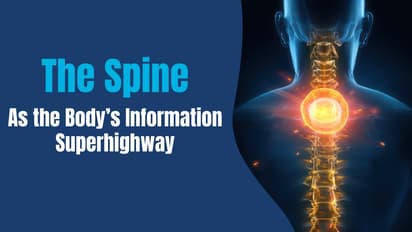
Our body is a marvel of design - and at the center of its communication network lies the spine. When we think about “back bones,” many of us only picture posture and support. But the spine does far more than hold us upright - it’s the essential channel through which the brain talks to every part of the body. Understanding how the spinal cord works and functions of the nervous system and spine helps us appreciate why spine care isn’t just about bones - it’s about life itself.
For residents of Ahmedabad, getting expert care from the Best Spine Surgeon in Ahmedabad can make all the difference. That’s why the name you often hear is Dr. Tarak Patel at IndoSpine Hospital, widely regarded among the Best Spine Hospital in Ahmedabad.
How the Spinal Cord Works - The Body’s Superhighway?
The spine is more than a backbone. Embedded inside is the spinal cord - a long, tubular bundle of nerves that runs from the brainstem down through the spine.
Thus, when you move your hand, sense heat, feel a gentle breeze, or even regulate heartbeat and breathing - it’s all thanks to information traveling up and down this spinal cord superhighway.
Functions of the Nervous System and Spine - More Than Just Movement
The spinal cord does many jobs - not just sending signals up and down. Its functions include:
In effect, the spine and spinal cord form the core of our nervous system - enabling communication between brain and body, coordinating movement and reflexes, and keeping many unconscious processes running smoothly.
Spine and Brain Communication - What Happens Under the Hood
To visualize the spine as the body’s “information superhighway” is apt - because that’s exactly what it is. The spinal cord carries two-way traffic:
Additionally, the spinal cord can process certain signals locally - for example, reflex actions. This allows for rapid responses without delay from brain processing. This seamless integration of structure (vertebral column + protective tissues) and function (nerve signal transmission, reflexes, regulation) is what makes the spine central to our everyday life. Damage, compression, or degeneration of this system can disrupt signals - leading to pain, loss of sensation, mobility issues, or even serious neurological problems.
Why Spine Health Matters - Especially if You Live in Ahmedabad
If you’re reading this in Ahmedabad - where many people lead busy lives, often with long working hours, commuting, or sedentary desk jobs - spine health matters more than you might realize. A slight injury or posture-related strain can affect the spinal cord’s ability to transmit information - leading to pain, tingling, numbness, weakness, or impaired mobility.
Moreover, local lifestyle factors - long hours in traffic, sitting in offices, or carrying heavy bags - can stress the spine’s structure, increasing risk for spinal disorders over time.
When such issues arise, you need prompt, expert care from a trusted spine specialist. That’s why many Ahmedabad residents turn to Dr. Tarak Patel, widely respected as the Best Spine Surgeon in Ahmedabad.
Under his care, patients receive thorough diagnosis, personalized treatment plans, and - when needed - advanced surgical intervention. The go-to institution for this is IndoSpine Hospital, regarded as one of the Best Spine Hospital in Ahmedabad.
At IndoSpine, spine care isn’t just about treating pain - it’s about ensuring that the body’s nervous “superhighway” functions smoothly again: restoring communication between brain and body, relieving nerve compression, and helping patients regain mobility and quality of life.
What Every Ahmedabad Reader Should Know - When to Seek Spine Care
Here are practical take-aways:
Conclusion
The spine is not just a structural support or a “backbone” - it is the lifeline that allows your brain to communicate with your entire body. Understanding how the spinal cord works and the functions of the nervous system and spine reminds us how vital spine health is.
For people in Ahmedabad, where lifestyle and work conditions often strain the spine, prioritizing spine health is essential. And when problems arise, expert care makes all the difference - which is why many trust Dr. Tarak Patel, the Best Spine Surgeon in Ahmedabad, and IndoSpine Hospital, one of the Best Spine Hospitals in Ahmedabad.
Taking care of your spine is, in effect, taking care of your body’s communication system - and ensuring you stay active, alert, and healthy for years to come.