

It's not just a matter of money when you buy bike insurance online; it's also a matter of common sense. Whether you ride every day or just sometimes, choosing between long-term and one-year coverage can change when you update your insurance, how much you pay, any fines you may face, and your peace of mind.
With traffic fines going up and insurance rules making it required, knowing all your choices is essential. This article discusses all the critical differences between long-term and one-year bike insurance, including costs, perks for the government, and how to choose. If you read this whole thing, you should be able to choose an insurance plan that fits your riding habits and your income.
Understanding One-Year Bike Insurance
Buying a one-year insurance plan will cover your two-wheeler for one year from the date the coverage starts. Like most insurers, this is the standard arrangement.
Key Features of One-Year Bike Insurance
Pros of One-Year Plans
Cons of One-Year Plans
What Is Long-Term Bike Insurance?
Based on the policy, long-term insurance protects your bike for a set amount of time, usually between 2 and 5 years. There is no need to update the coverage every year during this time.
Key Features of Long-Term Coverage
Pros of Long-Term Plans
Cons of Long-Term Plans
Cost Comparison: Which Saves You More?
Let's break it down with an example:
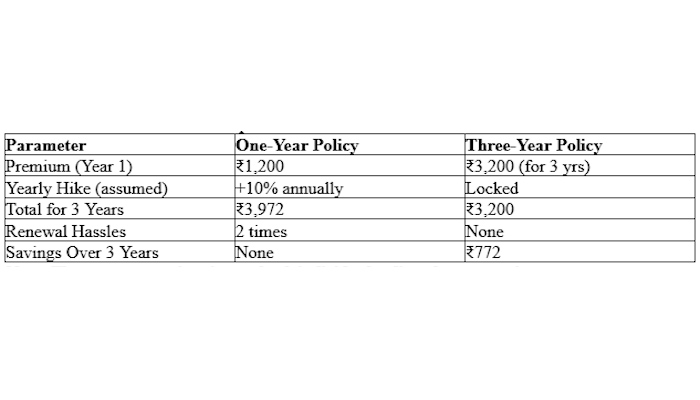
Note: These are approximations; check individual polices for exact prices
As you can see, long-term plans usually have lower total costs and are easier to use.
Government Regulations and Penalty Avoidance
All bike owners must always have third-party bike insurance under the Motor Vehicles Act. For even one day, not following the rules can lead to:
Long-term rules help you follow the rules for longer periods without any problems.
Claim Process: Does Duration Matter?
Whether you have a one-year or long-term third-party bike insurance, the way you file a claim is the same. What's different is how easy it is to keep ongoing coverage, ensuring that claims aren't turned down because the insurance has expired.
Insurance companies are also known to handle claims a little better for people who have had policies for a long time, since they think these customers are less likely to file a claim.
Ideal User for Each Type
Whether you buy one-year or long-term bike insurance online depends on how often you ride, how much money you have, and how often you update your policy. Take a look at which type works best for each type of rider.
One-Year Policy May Suit You If:
Long-Term Policy May Suit You If:
Buying Bike Insurance Online: A Modern Convenience
When you update your licence every year, there are often last-minute rushes, missed dates, and delays with paperwork. You could lose your insurance and pay hefty fines if you forget to reapply.
You can buy bike insurance online, which has made the process a lot easier, whether you want a short-term or long-term plan. Here are some good things about shopping online:
During the buying process, you can easily choose the length of time, amount of coverage, and riders, all from the safety of your own home.
Customer Service & Support: Long-Term Loyalty Wins
For long-term clients, many insurance companies offer benefits and better customer service, such as:
Short-term owners may miss out on these perks because their relationship lasts only a short time.
Which Policy Is Best for You?
It all boils down to your lifestyle, usage, and financial planning:

Conclusion
Both choices have their own benefits. A one-year policy gives you options, but it needs constant care. On the other hand, long-term protection saves you money, makes things easier, and gives you peace of mind, especially if you plan to keep your bike for a few years.
Before you decide, consider how often you'll use your bike, how long you plan to own it, and how responsible you are about renewing it. You can also compare and personalise your coverage choices by using bike insurance online sites.
FAQs
As of now, you can't change it. When the plan's time is up, you can buy a new one from your insurance company or another one.
2. If I cancel my long-term protection, will I get my money back?
Yes, but it's usually worked out by looking at how much time is left on the contract and the rules for cancelling it. There may also be handling fees charged by some insurance companies.
3. Is there long-term protection for older bikes?
It depends on how old your bike is and what your insurance policy says. Bike insurance
policies for new bikes usually come with 3- or 5-year terms, but policies for older bikes may
only be renewable for a short time.
Disclaimer: The above information is for illustrative purposes only. For more details, please refer to the policy wordings and prospectus before concluding the sales.